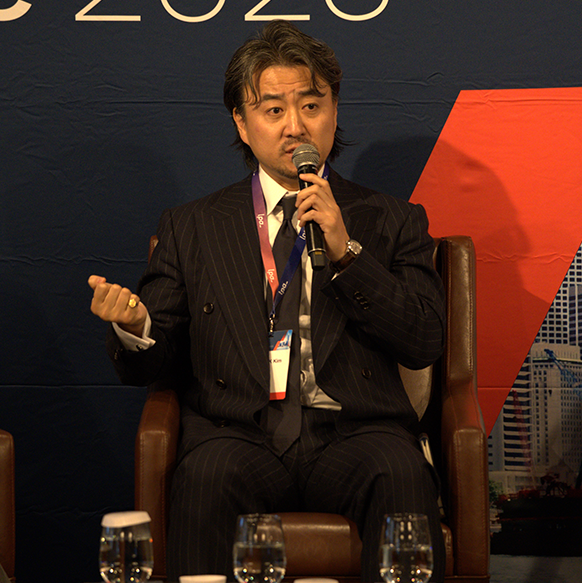
Private banks and wealth clients are the biggest drivers of custom indices in the Apac region, according to panellists at the SRP Asia Pacific Conference 2025 in Hong Kong on 10 June.
Josafin Fu, Apac product support at SRP, who moderated the discussion, asked the panellists which innovations in index construction are influencing the design of structured products in today’s market.
Covered call is a well-known structured product payoff strategy, but now it has become an index - Sean Kim, MSCI
“It’s a very dynamic market,” said Philippe Jacson, head of sell-side sales for Asia & Middle East, FTSE Russell, adding that the index provider has invested heavily to make sure it is able to cope with all the different innovations.
“It started with basic features such as decrement indices with risk control or vol target.
“In terms of overlays, we have been working on rolling futures that can be used as building blocks for structured products and provide exposure to the index,” Jacson said.
After receiving feedback from clients who are worried about the lack of diversification they face in certain markets, and especially in the US, FTSE Russell has developed a target diversification index methodology.
“We use an algorithm to divest some of the largest exposures to reinvest in a smaller one, having a target of 50 or 100 stocks equivalent in the index,” said Jacson.
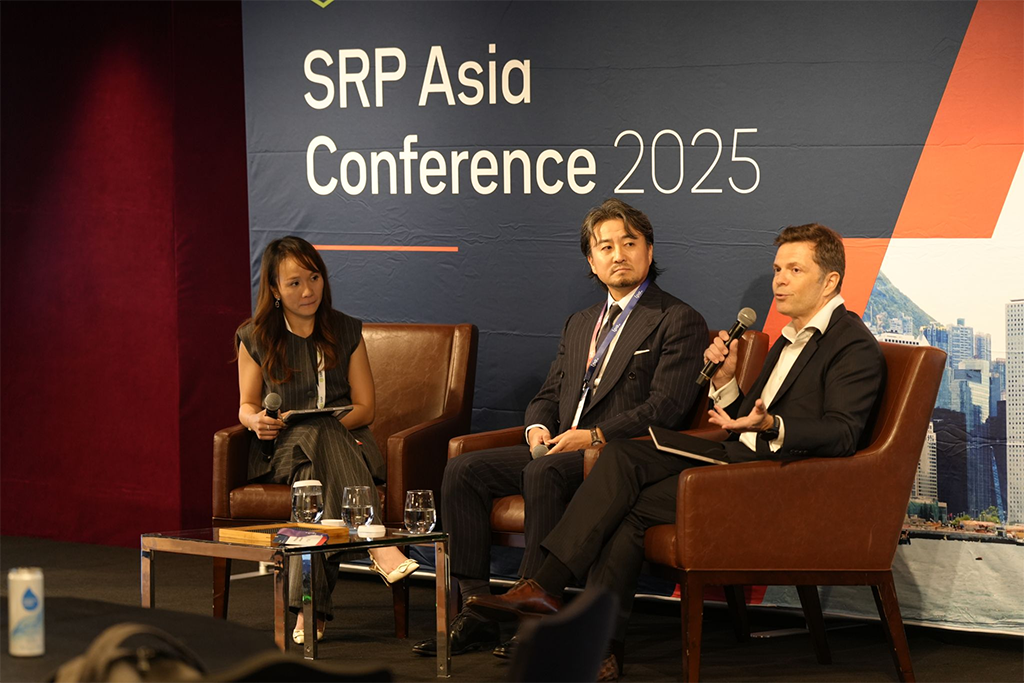
Left to right: Josafin Fu, SRP; Sean Kim, MSCI; and Philippe Jacson, FTSE Russell
Fellow panellist Sean Kim, executive director, Apac lead of index structured product at MSCI, told the audience in Hong Kong that he has been most excited about the ability to utilise advanced technology to enhance index design, especially when it comes to data collection and data analysis.
“MSCI has been using machine learning and then Gen AI to streamline the process of data mining, this makes a big difference,” he said.
Recent developments in index design have focused on creating systematic strategies that simplify complex investment concepts and improve client engagement. The question remains, however, how these strategies are embedded into an index and whether they can be used in structured products or other investment products.
Using systematic strategies for structured products is quite common according to Kim, who came up with three different examples.
“We combine rules-based index with the customised payoff or risk profile,” said Kim, citing factor indices as one example and risk control indices as another.
“You want to reduce equity exposure during times of market turbulence.”
The third example mentioned by Kim are indices that are already embedded with the payoff, with covered call the most common type. “Covered call is a well-known structured product payoff strategy, but now it has become an index, and many ETF providers are already launching ETFs out of it.”
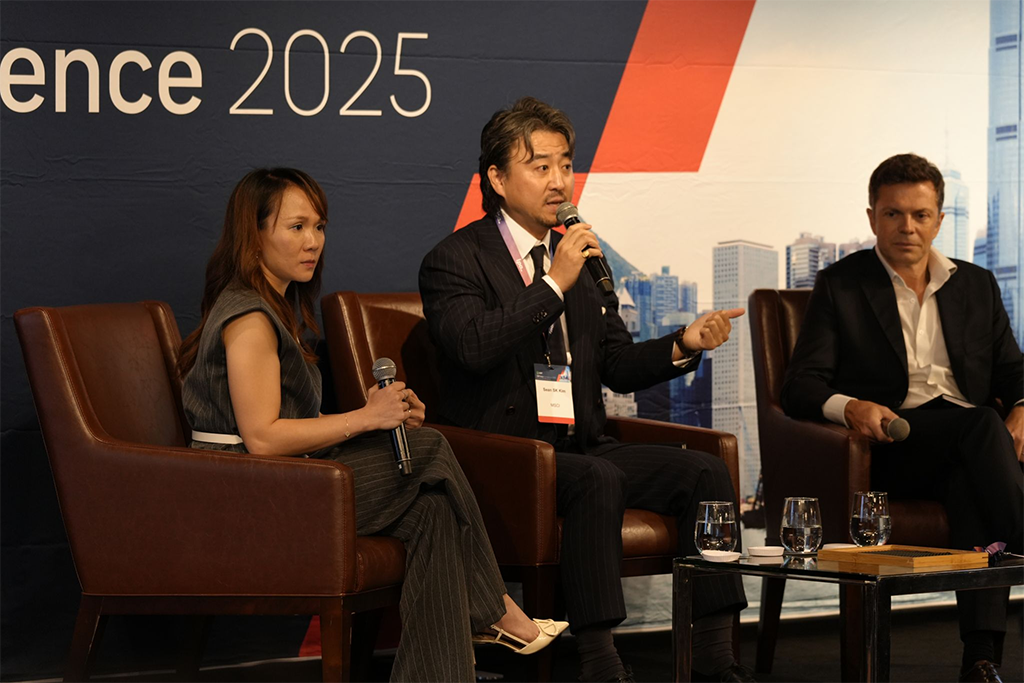
Left to right: Josafin Fu, SRP; Sean Kim, MSCI; and Philippe Jacson, FTSE Russell
Fu asked to what extend private banks, or even institutional clients, are influencing the customisation of indices for the structure products industry.
According to Jacson, private banks and institutional investors use a broad offering of products as a basis to create their own index and factor in their preferred stocks, sectors or ESG components.
“Banks or institutional investors have different views on ESG or climate change, on sustainability,” said Jacson, adding that clients often get a certain lead time or exclusivity, to make sure that they are the only party in the market promoting an index.
“Usually one or two years, so they can keep the pricing consistent over that period without fearing that the competition is going to come over after a month or two.”
Kim agreed that private banking and wealth clients are the main drivers behind custom indices.
“Wealth management is probably one of the fastest growing segments, it does require a lot of customisations on custom index baskets,” said Kim who emphasized that in some markets, like the US, certain baskets can provide tax benefits to wealth clients.
“By holding individual securities rather than funds, the investor can engage in tax loss harvesting – selling underperforming stocks to offset the gain and reduce the actual tax.”
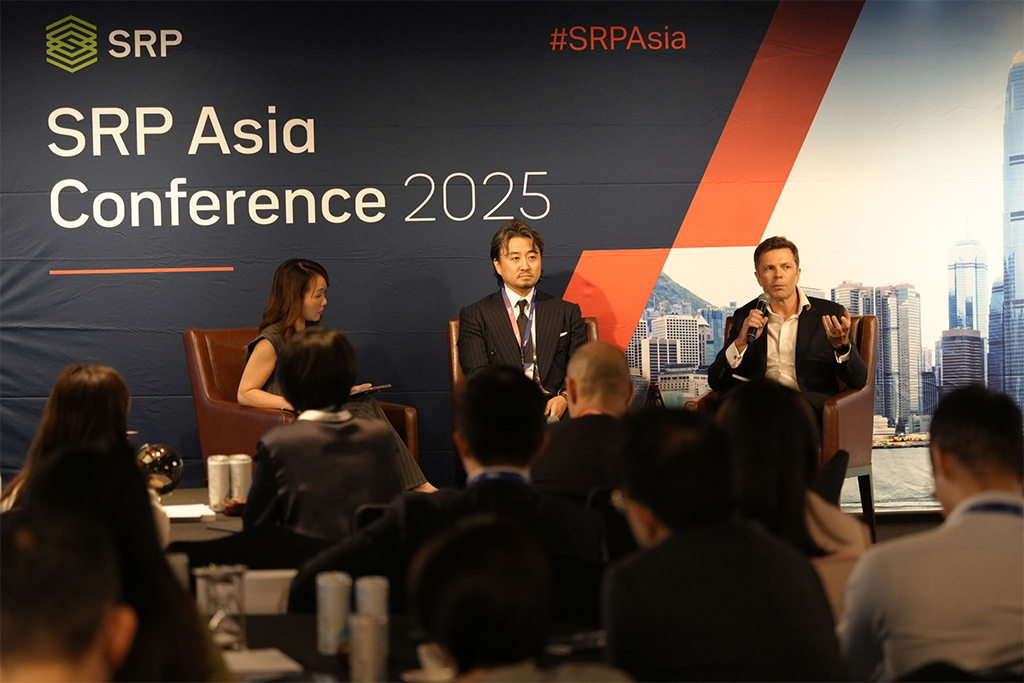
Left to right: Josafin Fu, SRP; Sean Kim, MSCI; and Philippe Jacson, FTSE Russell
According to Kim, dynamic and rule-based indices can help capture market trends more efficiently – a simple way of doing this is by changing the weighting.
A recent example are mean volatility indices, such as the MSCI World Mean Volatility Index or the MSCI US Mean Volatility Index, which have outperformed their benchmarks by five to 10% this year.
“By controlling or re-weighting securities based on the market turbulence […] you can achieve a much better performance,” said Kim.
Jacson agreed that custom indices are providing better exposure relative to the traditional benchmarks who will suffer in case of a bear market or recession. “The magnitude of the drawdown is going to be a factor.
“If we build a custom index that provides leverage, the drawdown will be much larger,” he said.
In the Singaporean market, Kim has seen a rapid growth of IUL or index universal life, which are insurance products designed to offer retirement income via a combination of capital protection and growth potential.
“This is a hybrid insurance product with a long maturity targeted at wealthy clients. [For these indices], rather than recommending one particular market or sector, we suggest broad global exposures or longer lasting themes,” said Kim.
Jacson sees two areas where value can be added in the IUL and broader insurance space.
“There is demand from banks who are designing the index which is going to be distributed by the insurance companies […] we can give them building blocks to design and build those products,” he said, citing the example of exposure to rolling futures or embedded risk-control features.
“It’s very popular and mature in the US [but] here in Asia it’s a new market, it is just starting and something I am happy to work on,” Jacson concluded.
Do you have a confidential story, tip or comment you’d like to share? Contact Us | SRP (structuredretailproducts.com).