With US$25 billion in monthly flows and new clients across three continents, the Singapore-based platform continues to cement its footprint across Asia, Europe and the Middle East.
2025 has emerged as a landmark year for FinIQ across every dimension - market activity, client onboarding, product expansion and technology integration.
2025 has been a very good year for the market in general. Equity-linked structured products in particular have seen explosive growth - Nitish Bandle
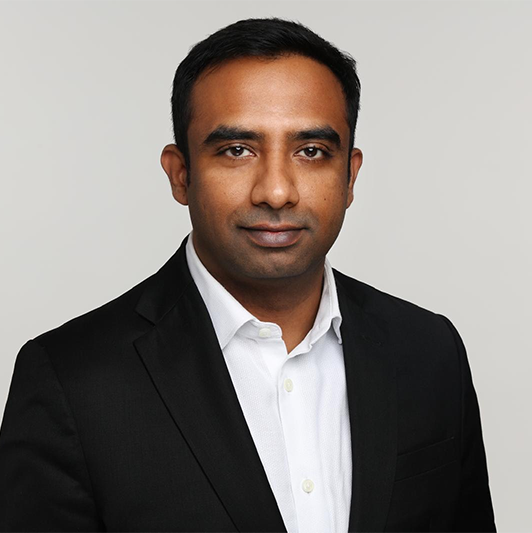
In an in-depth discussion, Nitish Bandle (pictured), director at FinIQ, outlined the firm’s performance trajectory, regional developments and future roadmap. His insights, paired with FinIQ’s 2025 announcements, paint the picture of a fintech platform rapidly scaling to become an infrastructure powerhouse for structured products and OTC derivatives.
“2025 has been a very good year for the market in general. Equity-linked structured products in particular have seen explosive growth,” said Bandle.
In October, FinIQ reported around US$20 billion on equity linked structured products, around US$18 billion in September, a trend that was increasing in Q3 25.
“This surge is driven by a growing global client base, deeper automation adoption, allowing clients to book trades directly on the platform and to an extent rising activity in markets like the UAE and Taiwan,” he said.
Bandle emphasised that 2025 FinIQ platform volumes are more than double those of the previous year, marking a historic acceleration for the fintech company.
The internal data reinforces this momentum: October 2025 was FinIQ’s biggest month on record, with over US$29 billion in structured and OTC trades, including FX derivatives. The platform handled 900,000 RFQs per day at peak moments and over 3,000 daily orders on peak trading days.
Broader product mix
An interesting trend in 2025 is the equalisation of activity across three major product types.
According to Bandle, “the volumes for structured notes, equity-linked OTCs, and FX-linked OTCs are almost equivalent”. He noted that trading patterns remain segmented by client personality.
Client segmentation reflects this product diversity with the FX side used largely by margin trading clients; accumulator products deployed by investors seeking to build positions in select underlying; and fixed coupon structures sought by investors focused on enhanced yields.
On the underlying asset side, US equities dominate. Bandle said plainly, “It’s mostly all the US underlyings,” citing Nvidia, Google, Microsoft, and Amazon as the most active names. Indices such as SPY (S&P 500) are frequently used for accumulator structures, while names like TSMC and Alibaba appear more selectively.
Geographically, Asian trading flows are strongest in Singapore and Hong Kong, followed by the UAE and Taiwan, according to Bandle.
Expanding footprint
Europe has become one of FinIQ's fastest-growing markets. Bandle stated that FinIQ now has “eight buyside clients” in the region - mainly based in Switzerland. “Every year we are onboarding two or three new clients” in Europe, underscoring consistent expansion, he added.
A standout trend in Europe is rising demand for OTC products, partly driven by Middle Eastern clients using European booking centers. Even though some European desks of counterparties don’t typically offer these structures in an automated way, FinIQ is trying to solve the challenge by automating the end-to-end accumulator workflows from both ends, helping sell-sides as well as buysides.
Despite strong adoption, Bandle acknowledged that Europe still lags Asia in automation readiness as far as click and trade is concerned. “Click-and-trade is still less common due to differences in automation, product simplicity and compliance integration.”
To help bridge this gap, FinIQ is expanding its integration capabilities across pre-trade checks, booking, lifecycle and post-trade processes.
Platform growth
FinIQ’s accelerating global footprint is evidenced by a series of major client launches this year.
In August 2025 Ballinger Group UK went live with the FinIQ FXD system for its FX derivatives business, covering simple and exotic options, accumulators and target redemption structures and multi-leg and multi-expiry option strips.
The system automates sales, trade capture, confirmations, regulatory reporting, valuation, and lifecycle management. Phase 2, set for Q1 2026, will introduce advanced risk management functions.
Also this year, Fubon Hong Kong integrated FinIQ for both its equity-linked investments and dual currency investment (DCI) operations, sourcing liquidity from leading investment banks via the platform; while a Canadian bank in Mexico adopted FinIQ’s Documentation Engine – this bank selected FinIQ to automate structured-product document generation including fact sheets, confirmations, and regulatory documents, which will go-live before end of the year.
FinIQ also reported that a Zurich-based firm deployed FinIQ EuroConnect along with FinIQ’s lifecycle management (LCM) tool by integrating with SIX Connexor which enables automated retrieval of outstanding trades via IBT, and access to live quotes from 20+ European issuers. Geneva-based Laka Capital became the first non-bank in Switzerland to adopt FinIQ.
2025 close will see FinIQ having eight buyside clients in Switzerland alone distributing products from 30 different issuers.
Workflow automation
The European market is becoming increasingly competitive, with 10+ multi-issuer platforms already serving the market. However, Bandle argued that the other solutions generally automate only isolated parts of the workflow and tend to focus on price discovery efficiencies.
By contrast, FinIQ’s unique value lies in true end-to-end automation. “FinIQ is different… you can automate the end-to-end flow,” including, compliance checks, documentation, booking, lifecycle management, and audit trails “and that too for multiple user personas including the execution desk, investment advisors, relationship managers, operations, compliance, middle office and back office”.
“This depth of integration has proven especially attractive for private banks seeking complete digitalisation rather than partial automation,” said Bandle.
As a matter of differentiation, FinIQ also enjoys the distinction of being “the orchestration tool for sellside banks besides being the multi-issuer platform for buyside banks”. According to Bandle, 11 leading investment banks have shown faith in FinIQ’s orchestrator module as their distribution and Orchestration platform.
Payoff coverage
A major area of investment in 2025 has been completeness of payoff coverage, especially for European private banks. Nitish stressed the importance: “We are investing very much in the European clients’ needs… making sure that we cover almost 99% of the payoff.”
FinIQ is also integrating artificial intelligence capabilities. “We’re using AI for some of the reconciliation-related work.” These enhancements allow FinIQ to boost efficiency and reduce operational risk while maintaining rapid scalability.
Additionally, the platform is evolving its product diversity to support client-driven innovation as users request for newer payoff variations especially on the FX OTC front.
“Just like equity derivatives and FX, credit and rates linked payoffs too are expected to become mainstream in the coming year,” he said.
Market outlook
FinIQ sees substantial opportunity ahead in markets such as Spain, France, Switzerland and Eastern Europe. With volatility and demand for yield-driven solutions expected to remain high, Bandle is optimistic.
“As long as the markets are going up… and market volatility is high… people have chances to invest in products with higher yields. I don’t see that changing unless there is significant change in market movement.”
With record-breaking trade volumes, significant new deployments across the UK, Europe, Asia and the Americas and an expanding roster of private-bank clients, 2025 has been a transformative year for FinIQ.
The company’s multi-asset capability, end-to-end automation, regulatory integration and increasing use of AI, position it as a global leader in structured-product and OTC workflow automation, concluded Bandle.
“Our 2025 achievements form a powerful foundation for exponential growth in 2026 and beyond,” he said.
Do you have a confidential story, tip or comment you’d like to share? Contact Us | SRP (structuredretailproducts.com)