As regulatory scrutiny intensifies and the actively managed certificate (AMC) market scales globally, US-based fintech platform AlphaNotes is positioning itself as a disciplined, institutional-grade structuring partner rather than a volume-driven issuer.
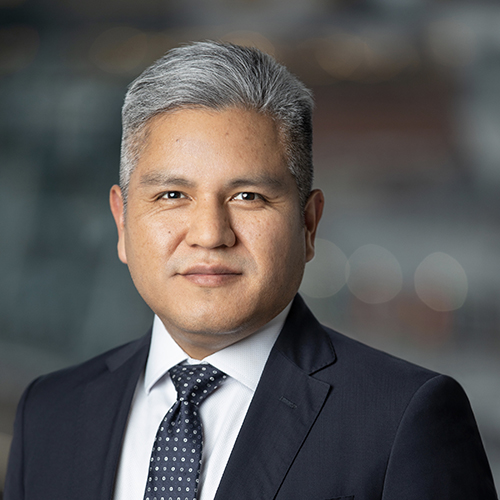
Chief executive Chris Corcino (pictured) and managing director Florent Rigaud told SRP that the firm’s growth strategy hinges less on speed to market and more on risk culture, governance and operational robustness.
We operate as a full-stack securitisation and structuring partner for AMC issuances and broader structured products - Chris Corcino
“We operate as a full-stack securitisation and structuring partner for AMC issuances and broader structured products,” said Corcino. “Our role spans structuring, arranging, calculation agent services, lifecycle management and governance. We deliberately issue through bankruptcy-remote vehicles in jurisdictions with strong regulatory frameworks, such as Ireland.”
That institutional positioning is deliberate as AlphaNotes works exclusively with professional and institutional investors, avoiding the retail segment entirely.
“Our demand comes primarily from professional asset managers, alternative credit managers, private banks and family offices,” says Rigaud. “We do not support retail distribution. That ensures our workflows, reporting standards and governance remain aligned with sophisticated strategies and high operational expectations.”
AMCs as precision tools
While AMCs are central to the platform, Corcino is careful not to oversell them as a universal solution.
Many managers want efficient access to professional investors without launching a full fund - Florent Rigaud
“AMCs are a flexible complement to bespoke structured notes,” Corcino said. “They allow managers to implement active or credit-oriented strategies in a cross-border ISIN-bearing vehicle. They are not a replacement for other wrappers. They are a precise tool within our securitisation toolkit.”
Rigaud adds that AMCs are best suited to transparent, actively managed mandates. “The AMC works when the value proposition is to give investors a live, transparent view of what the manager is doing, rather than engineering a complex payoff profile,” he said. “They are particularly relevant where fund structures are too slow or cumbersome.”
Standards over scale
In a market where independent platforms are proliferating, AlphaNotes is emphasising selectivity and discipline before growth.
“We do not securitise every request,” Corcino said. “If underlying assets or processes do not pass our internal risk review, we decline the transaction. Very few independent platforms operate with this level of discipline.”
That approach extends to jurisdictional choices and counterparties. The firm avoids offshore structures and works only with regulated managers.
“Every AMC is governed by strategy guidelines covering eligibility, concentration limits, rebalancing controls and liquidity expectations,” said Rigaud. “We sometimes decline transactions that do not meet these standards.”
Technology as infrastructure, not marketing
Lifecycle automation is treated as a core governance function to deliver rebalancing, corporate actions and NAV calculations that flow through structured workflows integrating managers, brokers, administrators and issuer vehicles.
“This is where collaboration with WealthTech providers is key,” Corcino said. “It allows NAV calculation, portfolio updates and reporting to be handled in an automated and auditable way.”
Rigaud describes a hybrid model combining internal workflow tools with external lifecycle platforms. “That gives us industrial-grade automation while remaining bespoke and client-centric,” he said.
Regulation as tailwind
Rather than viewing tighter scrutiny as a constraint, AlphaNotes sees it as validation.
“Debates around retail protection and fund substitutes reinforce our professional-only focus,” said Corcino. “We welcome regulatory attention that rewards well-structured, institutionally governed AMCs.”
Looking ahead, both executives point to growth in private credit, real estate lending and hybrid liquid-semi-liquid strategies.
“Many managers want efficient access to professional investors without launching a full fund,” said Rigaud. “AMCs and securitised wrappers are a natural fit.”
For Corcino, the direction of travel is clear: “Technology and regulation are converging. Leaders will combine institutional risk culture, open architecture and robust tech. Well-structured wrappers will increasingly become the default for certain active strategies.”
This article is an excerpt from a longer profile that that is part of the SRP AMC Report 2026, which is available for download here.
Do you have a confidential story, tip or comment you’d like to share? Contact Us | SRP (structuredretailproducts.com)