A panel moderated by Patrick Oberhaensli, CEO at Evolids Finance, discussed AMCs and the evolution of underlyings in this space on day one of the SRP Europe 2026 Conference, which took place in London on 17/18 March.
Volumes invested in actively managed certificates (AMCs) reached 400 billion in 2025, of which around 160 billion was invested in the wealth management hubs Singapore, Switzerland, the UK and the US.
The AMC is probably the most efficient way to deal with diversification in the world - Phillippe A. Naegeli, GenTwo
Today around 60% of AMCs is linked to bankable assets, 35% to alternative assets and approximately five percent to digital assets.
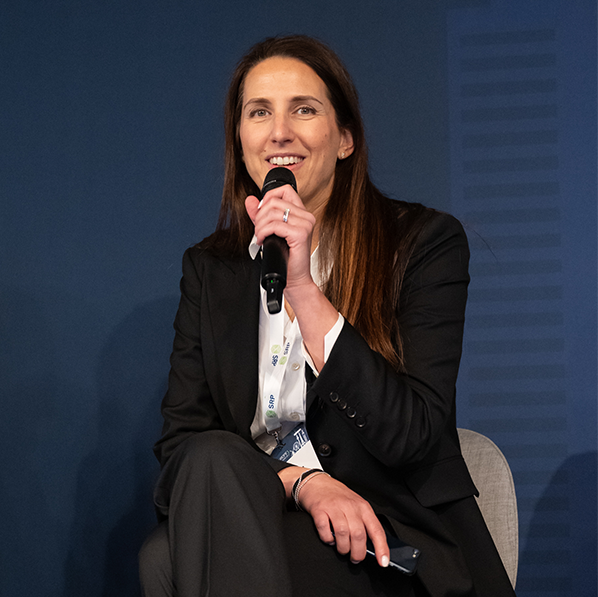
Initially mostly used in Switzerland by independent asset managers, Kepler Cheuvreux Solutions now manages approximately 250 AMCs with close to €2 billion assets under management, according to the company’s head Kathleen Izygon (pictured).
“We are trading AMCs all over Europe, and even outside Europe,” Izygon said.
“[AMCs are] a tool that was initially focusing on professional and qualified investors, but nowadays we also see AMCs distributed to retail end-investors,” Izygon added.
Julius Baer manages its own AMCs, which are sold via its private banking network. However, the bank also acts as the issuer, market maker and custodian of AMCs.
“We distribute AMCs to our own clients, but we also do business with external asset managers in Switzerland, many of whom are managing their strategies within an AMC set up,” said Daniel Espiñeira, who heads the structured products institutional sales team at the bank.

Left to right: Patrick Oberhaensli, Evolids Finance; Phillippe A. Naegeli, GenTwo; and Kathleen Izygon, Kepler Chevreux
According to Phillippe A. Naegeli, CEO and co-founder of GenTwo, the AMC market is growing by 25% per year. Naegeli’s GenTwo platform has securitised 6.8 billion so far with its clients benefitting from a 50% increase per year through AMC wrappers on alternative wrappers and on digital assets among others.
“The AMC is probably the most efficient way to deal with diversification in the world,” he told the audience.
Depending on the setup, Kepler Cheuvreux Solutions can either act as structurer, advisor or distributor of AMCs.
“Sometimes we wrap an external strategy, and we are only dealing with the operational aspects, such as rebalancing […] in other cases, we have our own in house strategies,” Izygon said.
In 2025, clients were increasingly looking for alternative strategies compared to traditional markets.
“The two main successes were AMCs on private markets and also on hedging strategies,” said Izygon, adding that demand for the latter in particular has been high.
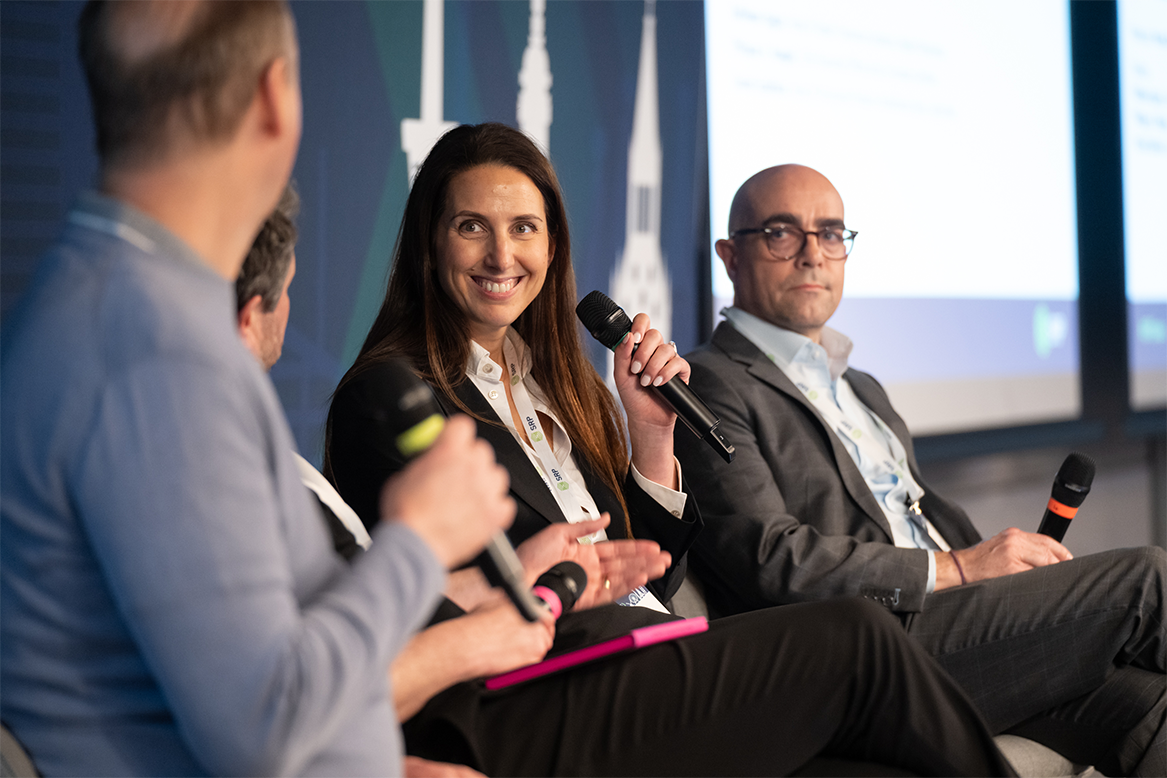
Left to right: Patrick Oberhaensli, Evolids Finance; Phillippe A. Naegeli, GenTwo; Kathleen Izygon, Kepler Chevreux; and Daniel Espiñeira, Julius Baer
Most of Julius Baer’s AMCs are invested in plain vanilla assets such as bonds, equities, funds and ETFs whilst the bank has also been offering access to hedge funds via the AMC wrapper for many years.
“Traditionally Julius Baer has good access to hedge funds […] although sometimes they are more expensive, especially hedge funds that have quarterly liquidities,” said Espiñeira adding that the bank’s platform recently implemented AMCs with an embedded leverage.
The alternative market is expected to grow by about 11% year-on-year and Naegeli admitted that there is plenty going on in that segment whether that is private equity, private debt or trade finance.
“Collectibles and commodities are in fashion, but also combinations of that.
“It's much easier to invest into an AMC through a bankable security than into a fund or into any other vehicle, because any bank can book it through the ISIN code into the deposits of their clients,” Naegeli said.

Left to right: Patrick Oberhaensli, Evolids Finance; Phillippe A. Naegeli, GenTwo; Kathleen Izygon, Kepler Chevreux; and Daniel Espiñeira, Julius Baer
One of the biggest differences between an AMC and a fund is the time to market, according to Oberhaensli who asked whether the panellists had seen any defense-oriented thematic in AMC that illustrated the former were more rapid than an ETF would be.
Time to market is one of the key advantages Espiñeira agreed. “It depends how fast you get the information from the advisor but once it took me three days to set up an AMC before year-end,” he said.
Izygon emphasised that for private markets or less liquid assets the time to market can be longer because of the due diligence and the extra checks that are needed. “But indeed, for 100% equity or 100% bonds it can be very quick […] that’s obviously one of the reasons why managers are using AMCs,” she said.
According to Naegeli, the market is entering a different phase with the financial industry turning into a creator economy.
“Customised products are in demand. What the investor wants is what counts the most in our industry, and right now they want to build on defense; tomorrow it could be AI and the next big thing is maybe digital or anything else.
“It's a creator economy, and you need a tool that is fast, accurate, standardised, that can be booked everywhere and is easy to travel through the banking system […] that's the remarkable thing about AMCs,” Naegeli concluded.
Do you have a confidential story, tip or comment you’d like to share? Contact Us | SRP (structuredretailproducts.com)