Structured products now represent 30% of unit-linked assets under management at some insurers, according to panellists at SRP France 2026, which was held in Paris on 20 May.
Life insurance companies have become key players in the distribution of structured products in France, according to Pierre Moretti, president at Neolife, who moderated the discussion.
Structured products currently represent roughly 30% of our unit-linked assets - Daniel Chevalier, Oradéa Vie
“The majority of the products we've discussed today is distributed within life insurance contracts, retirement savings plans (PERs), and capitalization contracts managed by our insurers,” Moretti said.
“For life insurance, the stars have been very well aligned for several years now, and we have seen gross and net premiums reaching historic levels,” said Daniel Chevalier, sales director at Oradéa Vie, a life insurance company within the Société Générale group.
Growth has been driven by two main engines: euro funds, boosted by the rise in rates, and unit-linked products. Within the latter, structured products make up the lion's share, according to Chevalier.
“Looking at our overall portfolio, structured products currently represent roughly 30% of our unit-linked assets,” he said before adding that within ‘self-directed’ contracts, structured products represent almost half of Oradéa Vie’s unit-linked assets.

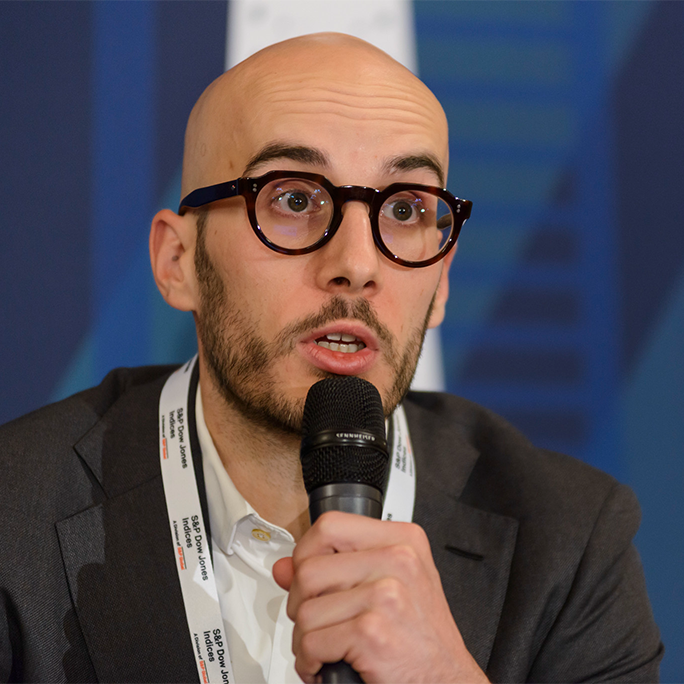
Left to right: Pierre Moretti, Neolife; Pierre-Alexandre Etienne, Abeille Assurances; and Daniel Chevalier, Oradéa Vie
Pierre-Alexandre Etienne (pictured), head of ALM & Financial Engineering at Abeille Assurances, agreed with Chevalier’s observations: “We have implemented a whole strategy to be able to include structured products in our balance sheets […] our assets under management have increased significantly today; it represents a large portion of both our inflows and our share of unit-linked products.”
Trends
At Oradéa Vie, the product offering remains standard, with the main trends coming via fixed-income and index-linked products.
“We have a good mix of both at the moment, perhaps in more niche or at least newer products,” Chevalier said.
We see Phoenix and Athena structures all the time, [these products] are discussed daily - Pierre-Alexandre Etienne, Abeille Assurances
Partner relations at Abeille Assurances are handled by its sales department, with listing requests directly received from dedicated platforms. The role of the company’s investment department is to qualify these products and similar to Oradéa, demand for fixed-income and index-linked has been around 50/50 over the past year, according to Etienne.
“We've been helped by the automotive sector recently, but nothing too surprising […] no overly exotic structures or indices either,” he said.
Products are validated at Oradéa in two stages via a validation committee, that follows a strict set of specifications.
“The daily challenge is to accept as many requests as possible while maintaining acceptable deadlines, all while avoiding overloading the equipment so it can process them efficiently,” said Chevalier, who emphasised the importance of finding the right balance in product listings.
“We only accept a certain number of issuers and anything that deviates from the specifications is non-negotiable,” Etienne added.
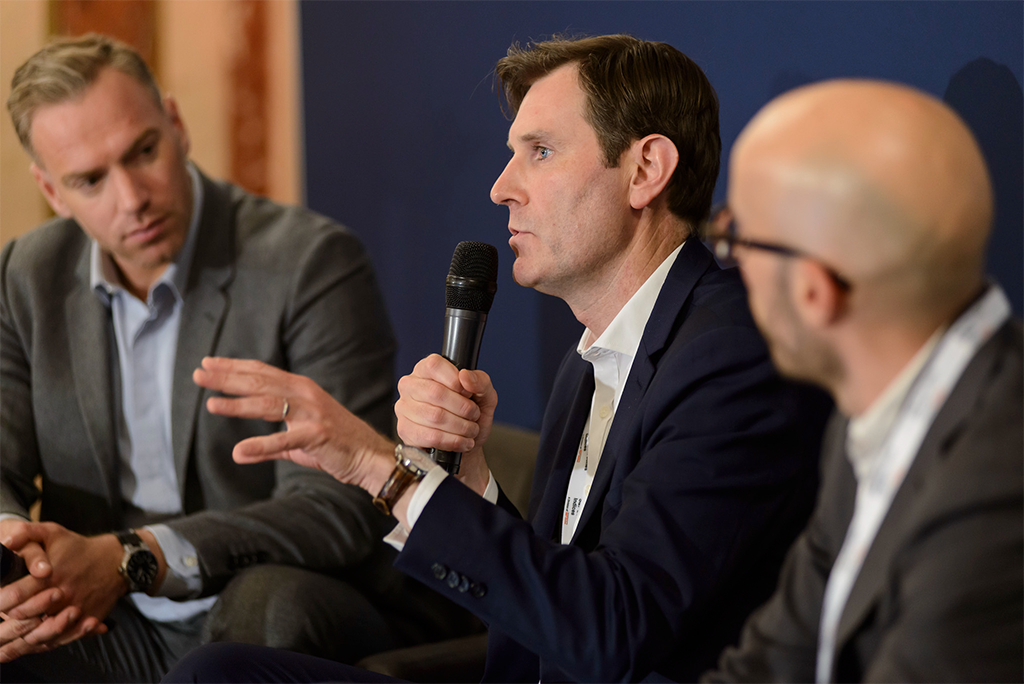
Left to right: Pierre Moretti, Neolife; Daniel Chevalier, Oradéa Vie; and Pierre-Alexandre Etienne, Abeille Assurances
Complexity
“As an insurer, we must ensure that the customer understands the product, so naturally we try to be vigilant,” said Chevalier, adding that Oradéa has chosen to implement a disclaimer in addition to the product documentation, summarizing the key points.
In this disclaimer, the insured confirm that they have fully understood the product.
“It's a matter of debate […] one might think that the more mechanisms there are, the more complicated it becomes," said Chevalier. "Each mechanism, individually, may seem simple, but sometimes it's the combination of all these elements that makes the product seem complex."
Etienne believes the real question remains whether the product remains understandable or not.
“We see Phoenix and Athena structures all the time, [these products] are discussed daily,” he said, adding that he believes investors understand these product types perfectly well. “We have simple structures that have been on the market for several years now. We see that these well-known structures become a little more difficult to understand without necessarily making the product structure itself more complex."
Distributors also play a fundamental role, according to Chevalier.
“We try to put ourselves in the customer's shoes and ask ourselves: will the customer fully understand what they're signing up for, and won't they later complain about not understanding the product?” he concluded.
Do you have a confidential story, tip or comment you’d like to share? Contact Us | SRP (structuredretailproducts.com)