
Product quality alone is no longer sufficient to attract clients, according to panelists at the SRP France 2026 Conference, which was held in Paris on 20 May.
The French market has seen a surge in structured product volumes, rising from €0.5 trillion to €2.5 trillion outstanding in five years. But having the best product today is no longer a guarantee of winning over the client, participants at the ‘Distribution battles’ panel agreed.
Unlike countries such as Italy or Germany, we cannot have products readily available and accessible through self-service in France - Thomas Fonsegrive
“Today, the battle is no longer solely about pricing or innovation,” said Ilan Abehsira, head of distribution for France, Belgium & Luxembourg at Crédit Agricole CIB (Cacib). “It’s also about the ability to get products approved, to list them with insurers, and to distribute and explain them to the end customer."
The French market is quite unique in that many structured products are wrapped within an insurance-based framework, compared to securities accounts that are accessed through platforms or private banks, which currently represent a ratio of one to four in the French market.
According to Patrick Chotard (pictured), CEO, Lynceus Partners, both channels have their own specific constraints.
“Distribution through the banking and insurance sector involves internal rule validation committees […] the securities account channel offers more flexibility, and therefore product innovation can occur in both cases, although one is somewhat more constrained,” he said.
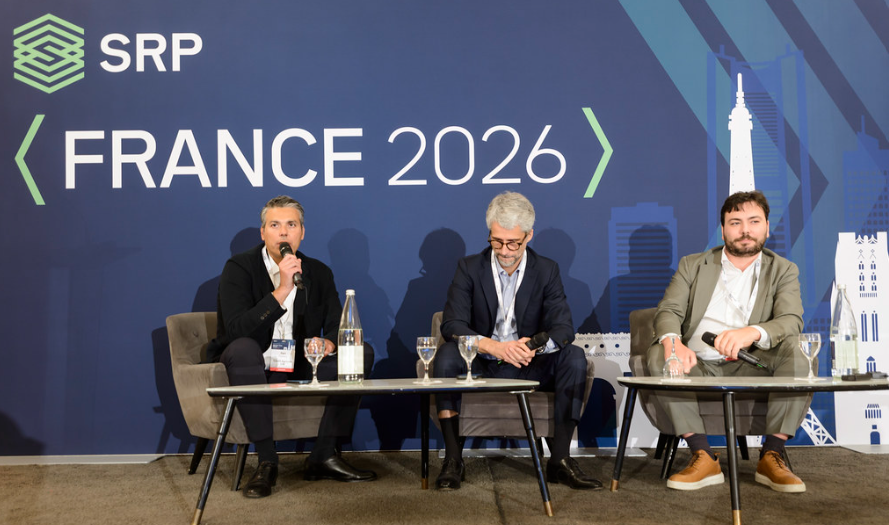
Left to right: Ilan Abehsira, Crédit Agricole CIB; Thomas Fonsegrive, Marigny Capital; and Patrick Chotard, Lynceus Partners.
Whether they are referred to by a private bank or through an insurance company, clients can be the same.
“The constraints apply to everyone,” agreed Thomas Fonsegrive, partner, cross assets investment solutions at Marigny Capital.
However, there are differences.
“We will have clients who are much more retail-oriented, with very large assets under management and significant portfolios in retail life insurance policies, whereas for ultra-high-network clients, we will be able to have much more tactical allocations with greater agility and opportunism in securities accounts,” Fonsegrive added.
Securities are for tactical products and capturing market conditions - Patrick Chotard
Many issuers are seeking to distinguish between the two approaches, with the life insurance approach relying on a very strong customer base and significant commercial power, often through industrial campaigns where structured products are more of a marketing tool than an investment product.
Meanwhile, securities accounts offer greater sophistication on the client side, allowing for more complex payouts, but with volumes that are generally smaller and more fragmented.
The implementation time for a product is much shorter, with a securities account approach.
“You can design, invest, and set the conditions all on the same day, whereas with the insurance format there are listing delays […] securities are for tactical products and capturing market conditions,” said Chotard.
With volumes in the French market almost quintupling over the last five-years, insurers have had to cope with listing volumes that have multiplied fivefold, which, in addition to their internal constraints, has created a bottleneck.
“If you had a team of five people to list products, today you have five times as many products, but you don't necessarily have 25 people,” said Chotard.
As delays are being lengthened, some players are modernising to do more with fewer staff.
Lynceus has worked with two insurers to help digitise their listings process. “A listing that used to take them 48 hours now takes them two seconds,” said Chotard, emphasising this is something the industry needs to tackle — whether issuers, insurers, or independent companies.

Thomas Fonsegrive, Marigny Capital
These days, the lifecycle of a structured product is considerably longer and regularly, and internal constraints have only lengthened the validation process.
“The real bottleneck today is that it is a validation risk and whether issuers are able to validate products in time to seize market opportunities,” said Abehsira.
On the issuer side, the increasing complexity of regulations regarding product placement and how to target a specific customer base only adds to the processing time required to acquire customers in France and offer them structured products.
“We face a particular challenge,” said Fonsegrive. “Unlike Italy or Germany, we cannot have products readily available and accessible through self-service in France.”
In France, structured products are not bought, instead they are recommended by a multitude of players, such as private bankers in wealth management and familiar offices.
“No one wakes up in the morning after hearing a report on a 24-hour news channel and thinks, ‘I should invest in a reverse convertible bond’,” said Chotard, adding that this isn't necessarily the case in other countries.
“In countries like Switzerland, there are newspaper ads to buy a reverse convertible bond on Nestlé, Roche and Novartis, and nobody bats an eye because it's something they do very often, either through self-service or via their bank advisors […] in France, that doesn't exist yet. There's always someone in the chain who provides advice, and this distribution model is specific to France,” Chotard concluded.
Do you have a confidential story, tip or comment you’d like to share? Contact Us | SRP (structuredretailproducts.com)