Digital platforms, automation and AI are transforming structured products distribution, enabling greater personalisation, lower ticket sizes and faster execution across the private wealth market.
Digital platforms are transforming how structured products are distributed, moving the market from relationship-driven sales towards investor-led execution while opening the door to greater personalisation, lower ticket sizes and AI-enabled product design, according to panellists at the SRP Apac conference.
Digital platforms now connect issuers, distributors and end investors across the full product lifecycle - Adam Cowperthwaite, Citi Global Wealth
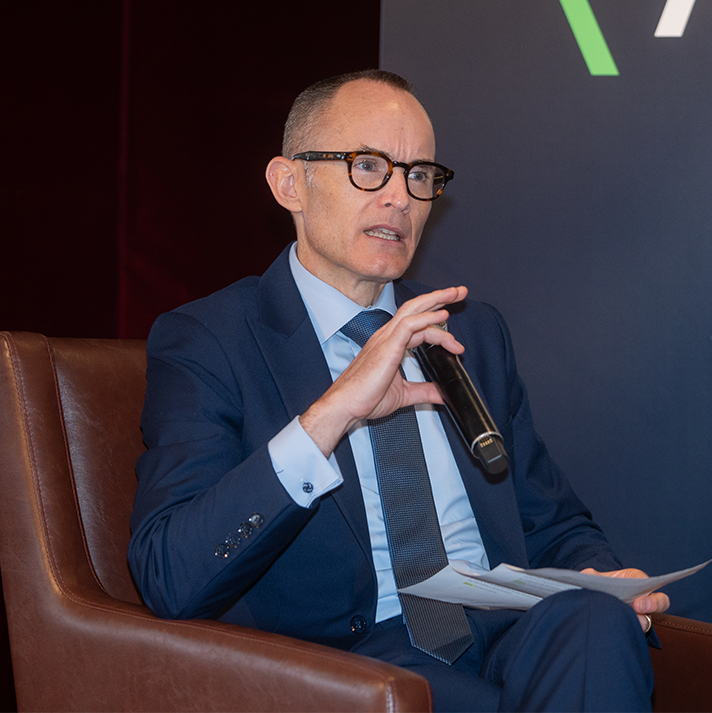
Moderating the discussion, Adam Cowperthwaite (pictured), head of private wealth solutions, Europe at Citi Global Wealth, noted that the definition of private wealth has broadened significantly. Structured products are no longer the preserve of ultra-high-net-worth investors but increasingly serve the full spectrum "from mass affluent through to high net worth and ultra-high net worth."
At the same time, distribution has evolved beyond the traditional issuer-to-bank model. “Digital platforms now connect issuers, distributors and end investors across the full product lifecycle, from pricing and execution through to coupon payments, corporate actions and redemptions,” said Cowperthwaite.
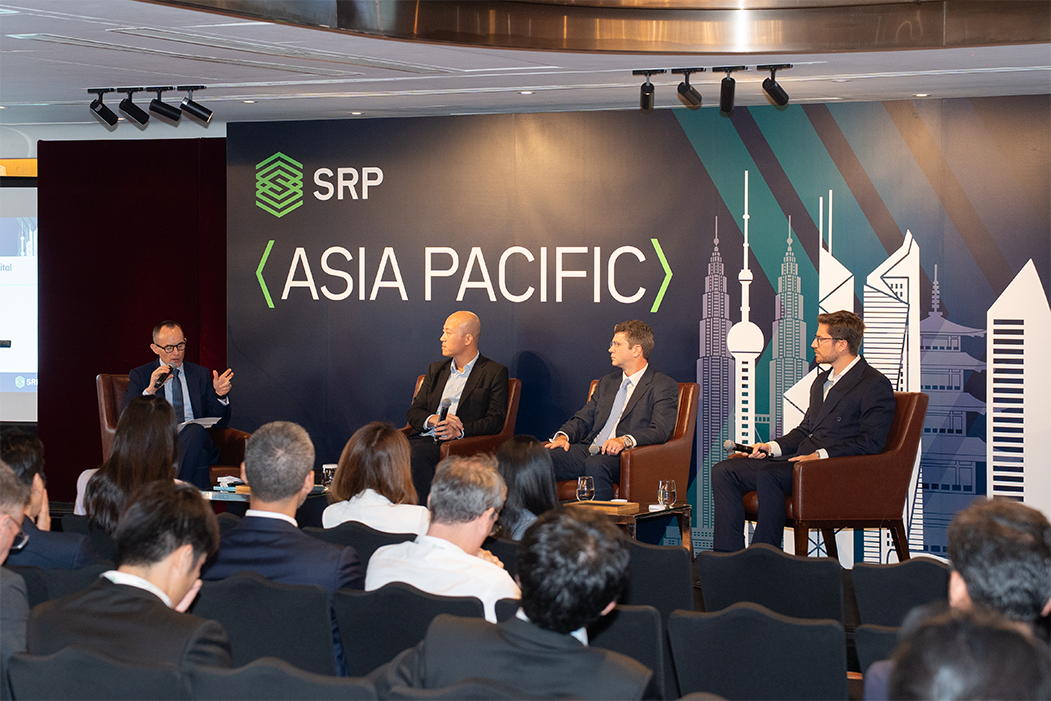
Left to right: Adam A. Cowperthwaite, Citi Global Wealth; Dickson Man, Leonteq Securities; Eric Michl, BBVA; and Francesco Marcon Fiastri, SIX
From relationship managers to digital investors
For Dickson Man, head of platform sales Asia at Leonteq, the biggest shift has been the move from relationship manager-led distribution to investor-driven execution.
I want to see 10 more prices before I make a decision. I want different variations, different underlyings before I decide - Dickson Man, Leonteq
"Ten or 15 years ago, relationship managers were opening Excel spreadsheets and refreshing prices for clients," he said. "Today it becomes a much more investor-driven distribution market."
Modern structured product platforms allow investors to compare multiple issuers and structures in real time before making an investment decision.
"I want to see 10 more prices before I make a decision. I want different variations, different underlyings before I decide," Man said, describing the behaviour increasingly seen among investors using digital platforms.
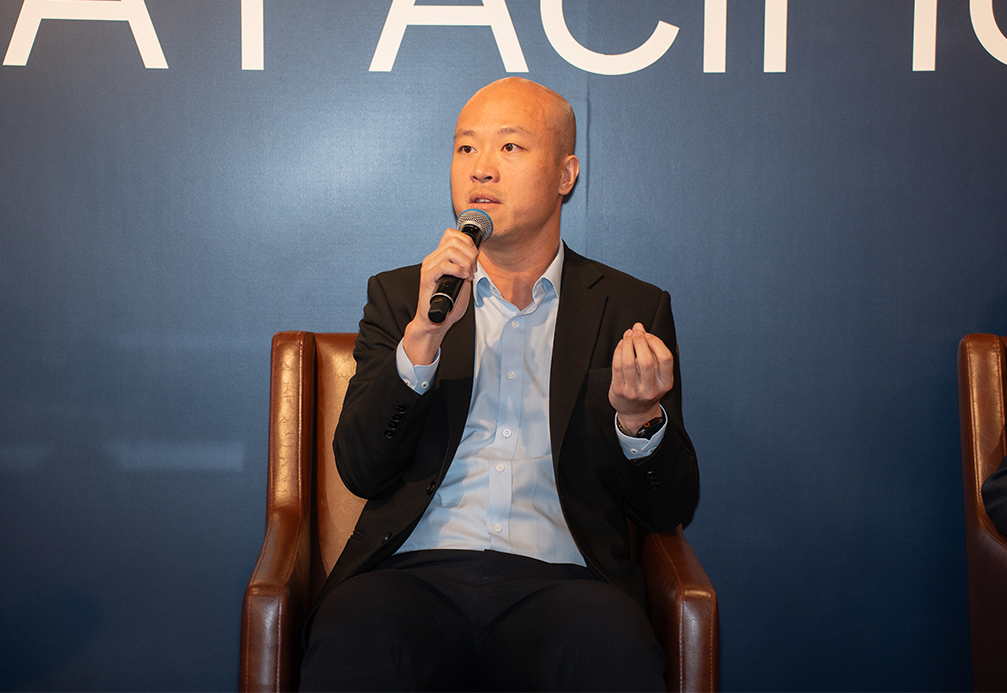
Dickson Man, Leonteq
The widespread adoption of APIs has dramatically accelerated price discovery and transparency while enabling distributors to integrate pricing directly into their own digital ecosystems.
Another emerging trend is the growing use of actively managed certificates (AMCs), which allow investors to access diversified portfolios of structured products through a single wrapper rather than purchasing individual notes.
Bespoke becomes scalable
Eric Michl, global head of equity structuring at BBVA, said technology has fundamentally changed the economics of structured product manufacturing.
Historically, bespoke structures were reserved for family offices and large institutional tickets, while retail investors were offered standardised principal-protected launches.
The bottleneck was simply the ability to produce prices.
"Each trader could maybe do 50 prices a day if you had enough coffee," he said. "Now we're doing hundreds of thousands of prices. Everything is done on the cloud."
As computational power has increased, the distinction between institutional and private wealth solutions has narrowed, allowing private banking clients to access increasingly sophisticated payoffs while raising expectations among mass affluent investors for on-demand bespoke solutions.

Eric Michl, BBVA
Michl warned, however, that automation remains uneven across jurisdictions. While front-office pricing and RFQ processes have become highly automated, regulatory reporting, documentation and settlement infrastructure continue to rely on manual processes in some markets.
He expects most markets to converge towards the highly automated private banking models seen in Hong Kong and Singapore over the next decade.
Operational infrastructure
Digital platforms are no longer simply execution tools, according to the panel.
Man argued that distributors increasingly expect fully integrated workflows covering pricing, documentation, suitability checks and regulatory reporting.
"Everyone is expecting full platform integration, everything automated, no delays," he said.
At the same time, mobile technology is reshaping investor behaviour across Asia, where brokerage applications increasingly allow investors to price and execute standard structured products directly from their smartphones.
Man expects self-directed investing to continue growing for simpler products such as fixed coupon notes, while advisers will remain central for more sophisticated and bespoke solutions.
Mature automation
Francesco Marcon Fiastri, head of structured products and exchanges at SIX, pointed to Switzerland as an example of what a highly standardised ecosystem can deliver.

Francesco Marcon Fiastri, SIX
SIX today lists more than 100,000 structured products while the Swiss OTC market exceeds CHF200 billion in outstanding volumes.
"The majority of the business is really low-touch," he said, attributing this to common industry standards adopted across issuers.
Although he does not expect Asia to replicate Switzerland's listed market, he believes post-trade automation and standardisation will increasingly converge as multi-issuer platforms continue to expand.
Lower ticket sizes, greater personalisation
Automation is also reducing minimum investment sizes.
According to Man, minimum notionals have gradually fallen from around US$200,000 to US$100,000, with some transactions now being executed at US$50,000.
The remaining constraint is often the time required by relationship managers rather than technology itself.
AMCs provide another way of lowering effective investment sizes by combining multiple structured positions within a single investment vehicle, allowing investors to diversify across payoffs and underlyings.
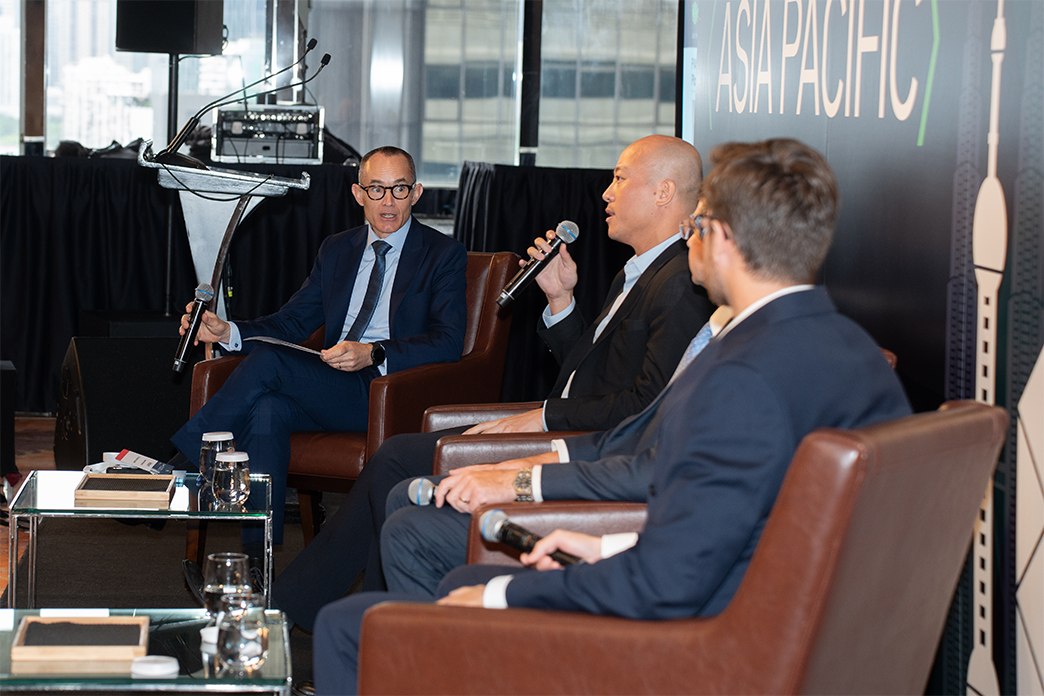
Left to right: Adam A. Cowperthwaite, Citi Global Wealth; Dickson Man, Leonteq Securities; Eric Michl, BBVA; and Francesco Marcon Fiastri, SIX
Francesco added that some European multi-issuer platforms already support average ticket sizes between €30,000 (US$34,300) and €50,000, with certain trades executed below €15,000.
Despite increasing levels of customisation, he noted that the bulk of market volumes still concentrate around standard autocallables and reverse convertibles.
AI moves from concept to production
Artificial intelligence was also a topic of debate during the panel and is widely viewed as the next major efficiency layer.
BBVA has developed machine learning models capable of approximating complex stochastic volatility pricing in milliseconds, allowing advisers to test thousands of basket combinations before validating the final structure using traditional pricing models.
The bank is also deploying agentic AI to reconcile trade information across front- and back-office systems and reduce operational risk as issuance volumes continue to grow.

Members of the audience at SRP Asia Pacific 2026 in Hong Kong
SIX is applying AI to automate document parsing, generate structured data from prospectuses and improve pre- and post-trade reconciliation.
Closing the session, Cowperthwaite said the future of structured products lies in delivering increasingly personalised solutions at scale.
“Investors increasingly expect products tailored to their preferred payoffs and underlying assets,” he concluded. “Meeting those expectations will require digital platforms and AI capable of supporting millions of price iterations while managing increasingly complex product lifecycles behind the scenes.”
Do you have a confidential story, tip or comment you’d like to share? Contact Us | SRP (structuredretailproducts.com)