Index providers and ETF issuers are working more closely to develop QIS strategies across Asia Pacific, with Hong Kong's covered call ETF market emerging as a model for future growth.
Index providers in Asia Pacific are increasingly functioning as product co-designers rather than pure benchmark suppliers, according to panellists at a session on index engineering for structured products at the SRP Apac 2026 Conference that took place in Hong Kong SAR last week.
Investor appetite is now shifting toward downside-protected and partial-coverage strategies - Emily Wu, Mirae Asset
Autocallable indices, intraday volatility control and artificial intelligence (AI)-driven thematic signals as the next areas of build-out for the Apac market.
Cecilia Tang, sell-side client coverage at FTSE Russell, said the firm’s core role of providing investable underlying exposure remains unchanged, but that a growing share of demand now sits in customisation.
“The objective here is to ensure the underlying exposure is not just investable but also efficient from a hedging perspective,” said Tang. “Then on top of that, we can tailor make and customize solutions, so using techniques like decrement, rolling features, thematic basket, or different option strategies like autocallable.”
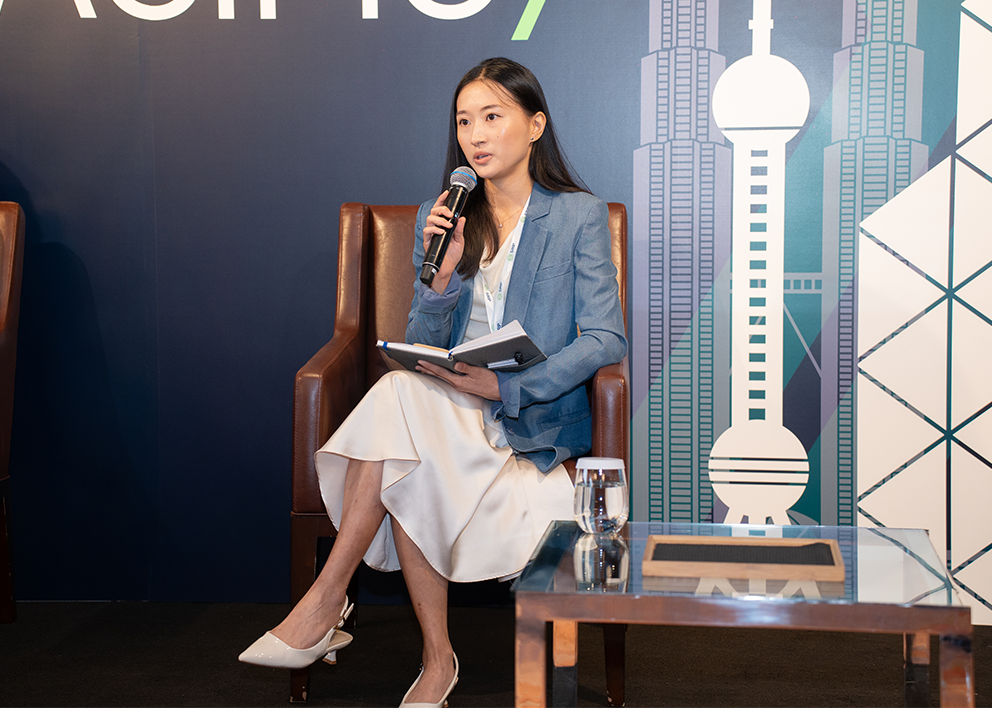
Celia Tang, FTSE Russell
FTSE Russell is developing index-based autocallable strategies that replicate a basket of hypothetical autocallable notes. These quantitative investment strategies (QIS) have taken off in the US market through ETFs over the last 12 months, as SRP reported.
She also pointed to the nascent index universal life (IUL) insurance markets in Singapore, Hong Kong and Taiwan as an example of how regulatory and investor preferences can diverge sharply across jurisdictions that sit close together geographically.
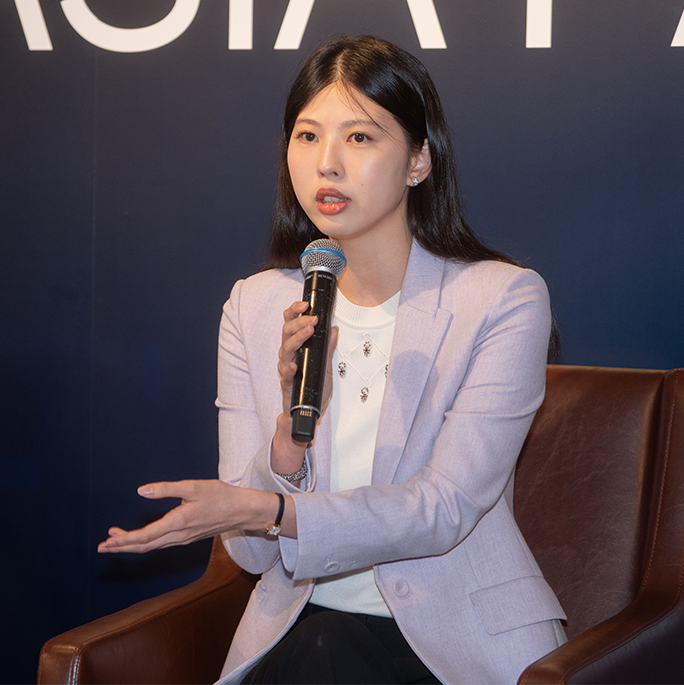
Global X, which launched Hong Kong’s first covered call ETF in February 2024, used historical back-testing across US, Hong Kong, Taiwanese, South Korean and UK benchmarks to identify Hong Kong as “offering the highest at-the-money monthly option premium (27%) of the markets studied”, according to Emily Wu (pictured), senior institutional sales for the American ETF provider owned by Korea’s Mirae Asset.
“Investor appetite is now shifting toward downside-protected and partial-coverage strategies,” she said, citing specific demand for an Apac semiconductor supply chain index, spanning Korea, Taiwan, Japan and China, which is structured with 30–50% option coverage rather than full coverage, allowing investors to retain a larger share of upside participation in exchange for a smaller income component.
Volatility control moves intraday
On risk management, Tang said FTSE Russell has moved beyond legacy end-of-day volatility control mechanisms, which typically carried a one-to-two-day implementation lag, toward intraday volatility control across its Russell and Asia-focused benchmark families.
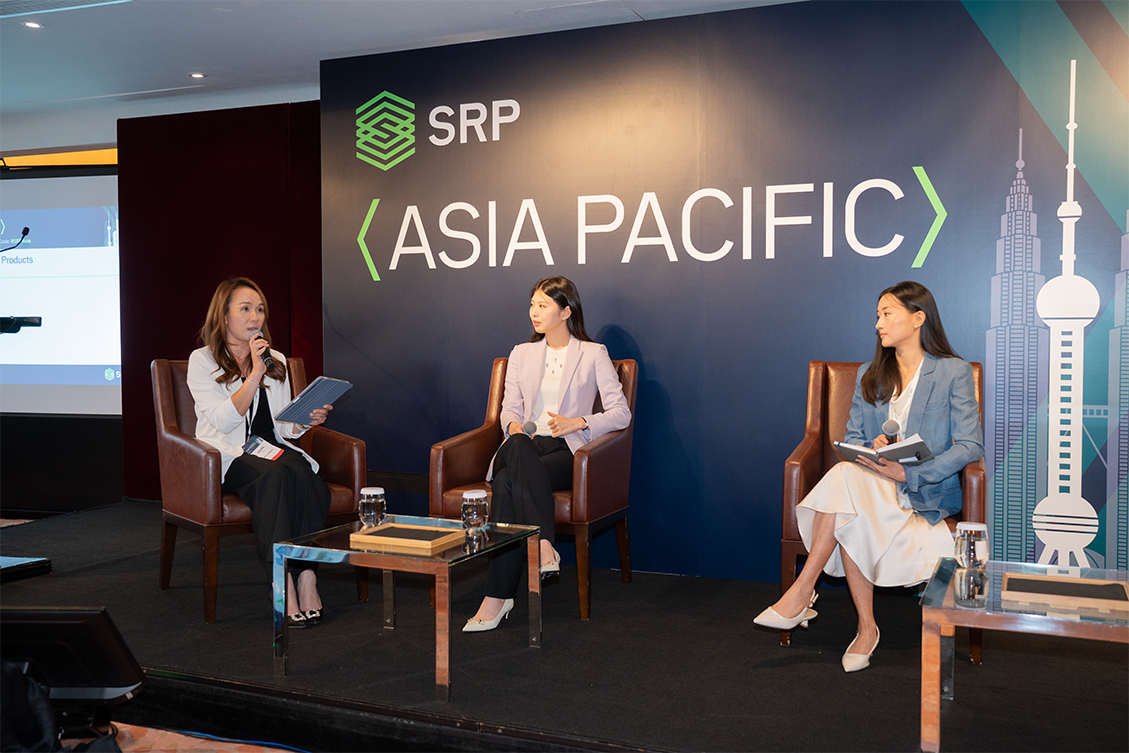
Left to right: Josafin Fu, SRP; Emily Wu, Mirae Asset; and Cecilia Tang, FTSE Russell
“What matters is how the index behaves across the whole market cycle, including drawdowns, volatility spikes and regime transitions,” she said. “Traditionally we were doing end-of-day vol control with a one-to-two-day lag because of implementation, but today we can calculate intraday volatility control. It helps us react to changing market conditions more precisely."
On multi-asset indices, Tang said FTSE Russell now extends beyond traditional fixed-weight equity, bond and commodity allocations to include digital assets, and is developing macro-signal-driven dynamic allocation indices using both third-party and in-house research inputs.
AI and Tokenisation
Asked where their firms would prioritise investment over the next two years, Wu pointed to AI-driven investor education tools to scale product explanation for retail audiences, while Tang named macro-allocation research and AI-powered thematic signals as parallel priorities.
Tang also flagged tokenisation as an emerging area, noting FTSE Russell already maintains an on-chain flagship benchmark and is in discussions with crypto exchanges on further index tokenisation projects.
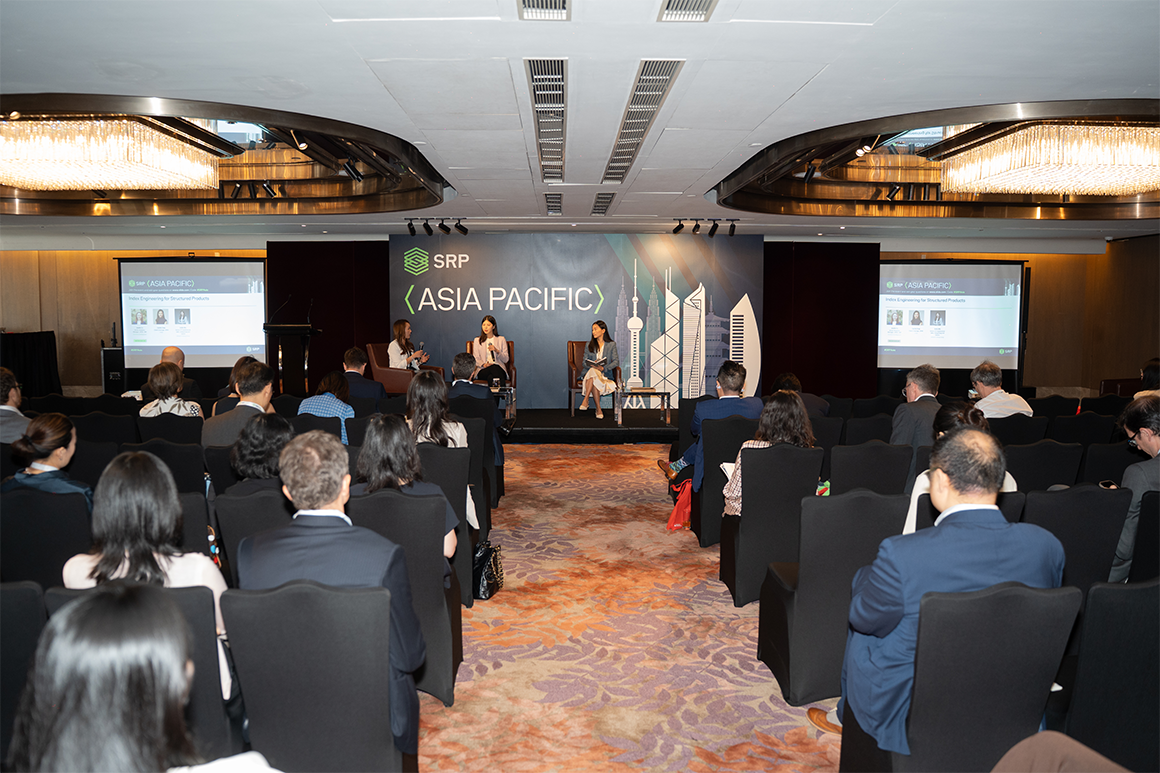
Left to right: Josafin Fu, SRP; Emily Wu, Mirae Asset; and Cecilia Tang, FTSE Russell
“The capability we earnestly need is using AI content or AI technology to let issuers educate investors at scale,” Wu said. “This includes visualising what the product and structure look like, what the investment outcome will be, and why you should use an ETF as your allocation tool to massively educate retail when we launch more innovative products next year.”
During the session, a poll finds that macro and AI had emerged as the audience’s top two priorities.
“At the end of the day there are different needs in the market — some prefer a simpler story, some prefer a complex one,” said Tang.
Do you have a confidential story, tip or comment you’d like to share? Contact Us | SRP (structuredretailproducts.com)