Insurers, pensions and hedge funds are hunting for cheaper tail-risk hedges in a volatile, low-correlation market.
Institutional investors in the Asia Pacific are increasingly turning to structured products and derivative overlays to navigate a volatile macroeconomic environment and meet tightening regulatory capital requirements, according to two industry experts speaking at the SPR APAC 2026 Conference last week.
Since risk-based capital regimes have been implemented, insurance companies need to be subject to certain capital requirements - Sam Leung, Schroders
For years, structured products in Asia were primarily viewed as yield-enhancement vehicles for private banks and high-net-worth individuals (HNWIs). However, the landscape has shifted significantly over the past two years. Insurers, pension funds, and endowments are now actively utilizing these instruments as core building blocks for portfolio construction, risk management, and asset-liability matching.
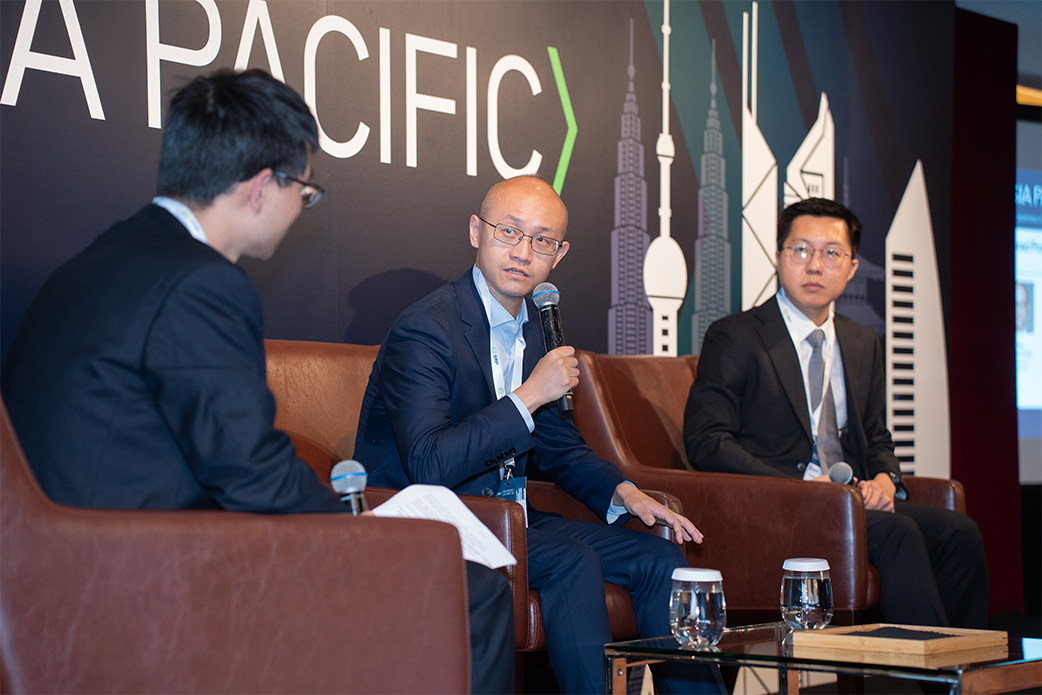
Left to right: Tuohua Wu, Bachelier Technology (moderator); Li Ding, Shanghai Shifeng Asset Management; and Sam Leung, Schroders
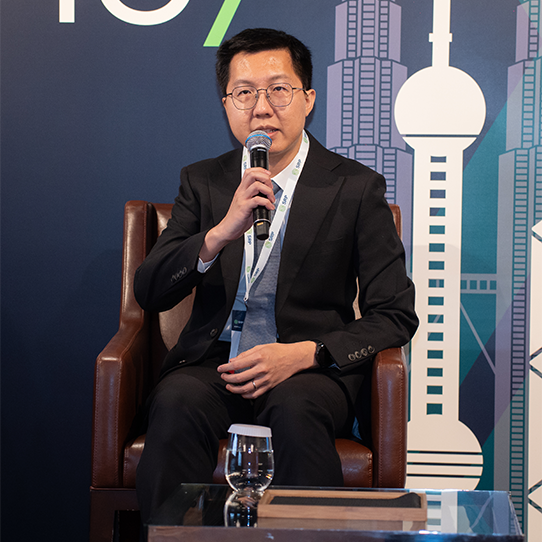
A primary driver of this adoption is the implementation of stricter capital regimes across the region. Sam Leung (pictured), Asia solutions manager at Schroders, highlighted that solvency regulations are forcing Asian insurers to prioritize portfolio risk management.
“Since risk-based capital regimes have been implemented, insurance companies need to be subject to certain capital requirements and focus on managing the risks within their portfolios,” said Leung, pointing to Hong Kong’s risk-based capital (RBC) regime since July 2024 as a key catalyst.
To meet liability cash-flow requirements without suffering from excessive volatility, insurers are increasingly layering derivative-based solutions over their core physical asset allocations. These strategies include interest-rate hedging, equity downside protection, and customized securitization structures.
“That's why there’s a lot of new initiative around leveraging derivative-based solutions, structured products, or other segregated mandate to perform risk their management,” said Leung.
He emphasized that for insurers, yield enhancement is secondary to yield protection. By securing future cash flows through structured hedges, insurers can also achieve more favorable capital treatment and improve their solvency ratios.

Left to right: Tuohua Wu, Bachelier Technology (moderator); Li Ding, Shanghai Shifeng Asset Management; and Sam Leung, Schroders
For hedge funds and active asset managers, the challenge in the current cycle is limiting downside risk while preserving upside participation. Li Ding, investment manager of Shanghai Shifeng Asset Management, described the current market environment as one defined by “outliers” and “proxies”.
Ding noted that traditional 60/40 equity-bond portfolios and broad index hedges are often insufficient due to extreme volatility concentration in specific sectors, such as technology, and historically low correlations across asset classes.
“The biggest problem for this cycle is how to limit your risk and still keep your profit available,” he said. To address this, his firm has utilized autocallable snowball structures combined with deep out-of-the-money (OTM) put options to protect against tail risks.
Furthermore, Ding pointed to the importance of finding cost-effective proxies for hedging. Instead of paying high premiums for direct exposure to volatile assets, his team has utilized sector ETFs and related options to define their delta and vega exposures more efficiently.
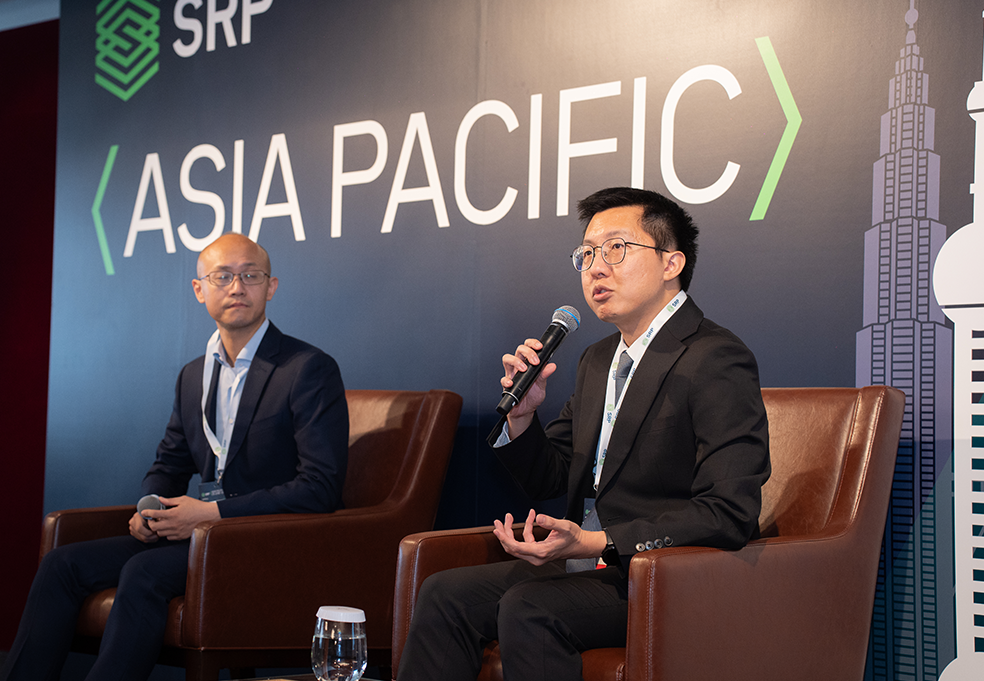
Left to right: Li Ding, Shanghai Shifeng Asset Management; and Sam Leung, Schroders
Despite the complexity of the payoffs available in the market, institutional allocators maintain a rigorous “look-through” approach.
Leung explained that sophisticated investors decompose any structured product into its fundamental components, such as a cash return combined with a derivative overlay. This allows them to understand the underlying risks and customize the implementation to meet specific jurisdictional and liquidity constraints.
Implementation itself is a critical focus for large allocators. Institutions must carefully manage counterparty risk, collateral requirements, and trade sizing. Rather than executing massive hedges in a single transaction, Leung noted that institutions often spread their execution over time and negotiate pricing across multiple venues to achieve optimal implementation.
When asked to identify the most important trends for institutional allocators in the coming months, the panelists offered distinct but complementary views. Ding urged the market to “embrace AI”, while Leung emphasized the growing importance of “active index-based strategies” as a key topic for the future.
“I think index-based strategy is one of the main key topics. I believe active index should be a more hot topic in the future, because index providers will be working with insurance companies on that,” said Leung.
Do you have a confidential story, tip or comment you’d like to share? Contact Us | SRP (structuredretailproducts.com)