
QIS, the rise of AI and the explosion of data were among the topics discussed during the ‘QIS & multi-asset indices for product innovation’ panel at SRP Asia Pacific in Hong Kong on 24 June.
Andrea Ip, sector specialist, Apac, State Street Investment Management, who moderated the panel, kicked off proceedings by asking panelists to define quantitative investment strategies (QIS) and the trends in the Asia Pacific region.
[Institutional investors] mostly use QIS for portfolio constructions, using a rules-based strategy to overlay a carry on top of their portfolio - Yuan Tian, S&P DJI
QIS means different things for different people, according to Yuan Tian, executive director, multi-asset indices, S&P Dow Jones Indices.
“In the retail space, people see QIS as something that is quite daunting […] but it’s just a rules-based strategy that allows you to achieve certain investment objectives,” Tian said adding that in the institutional market, investors use QIS based solutions all the time.
“[Institutional investors] mostly use QIS for portfolio constructions, using a rules-based strategy to overlay a carry on top of their portfolio,” she said.

Left to right: Andrea Ip, State Street Investment Management; Yuan Tian, S&P Dow Jones Indices; and Zhenzuo Ye, Nomura IWM.
In Asia, QIS has not been overly popular in the wealth management space, however, panelists have noticed somewhat of a pickup recently.
“External asset managers, family offices and corporate clients are increasingly using QIS as part of their asset allocations,” said Zhenzuo Ye, head of cross asset structured solutions, Nomura IWM.
QIS comes into a play to achieve better pricing – especially for cheap underlying replications such as rolling futures - Zhenzuo Ye, Nomura IWM
There are three main trends for QIS usage in the Asian market. The first is for core asset allocation with many family offices and external asset managers (EAMs) using QIS as a tool instead of the traditional 60/40 portfolio.
“QIS comes into a play to achieve better pricing – especially for cheap underlying replications such as rolling futures,” said Ye who has been trading linear payoffs with one of Nomura’s counterparties during the last year.
“QIS is a nimble tool which covers a lot of ground,” said Ip who asked about the typical pathways taken by investors to get into the QIS space.
“Perhaps they start off with 60/40 before accessing part of the market that's inaccessible by current tools, or perhaps they have efficient pricing that they realized along the way that they should switch into QIS strategies,” Ip added.
The most difficult part of selling a QIS is the perspective or the perception of the investors: how to persuade them to switch from the traditional portfolio – where they have control, they can buy and sell their allocations at any time – into a rule-based strategy, according to the panelists.
“Show them something simpler and with a very obvious pricing benefit; something which brings you a better performance than your traditional portfolio,” Ye said.
Underlying QIS strategies
When it comes to underlying QIS strategies, and the typical asset classes seen in those strategies, different maturities apply for different users, often depending on the region.

Zhenzuo Ye, Nomura IWM
“The question becomes, as a gatekeeper, how you provide the most suitable payoffs and product wrappers to your investors according to different strategies,” said Ye.
For core allocations investors would typically look at a three to five-year horizon for principal protected notes, however, for tactical allocations, especially some of the open-ended structures available on the market, that can be very different.
“For an open-ended product, if you see signals or radical changes in the market environment, you just unwind your positions and re-enter your carry at a better entry point,” said Ye.
Tian emphasized that QIS as a tool can also be utilized for more complex ideas, and putting everything into index format can help the investor.
“People like AI driven investments, but at the same time they feel it’s a black box […] combining that into an index format with rule-based approach helps reaching out to more investors,” said Tian who cited intraday risk control strategies as ‘a very interesting’ idea.
“But how do incorporate such high frequency into something that is easy to follow and completely transparent,” she asked.
Technology
In recent years, there has been plenty of movement in the market when it comes to the development of technology, especially from an index provider perspective – starting with automations, moving on the machine learning and getting more data to build indices, and now AI.
“How does this help deliver QIS index strategies to clients, in the form of efficiency transparency and systematic rules-based solutions,” questioned Ip.
“The rise of AI and the explosion of data does not just bring opportunities, it's also bringing challenges,” said Tiang, adding that the challenge is represented by the investors, since they are the ones concerned about stepping into something that they feel is not easy to understand.
“In terms of the opportunities, a few years ago, intraday data trading was unthinkable, but now everyone is doing that […] the data really helped people allowing the intraday data to incorporate into an intraday risk control index to allow a better-informed risk management process for the investors,” said Tiang.
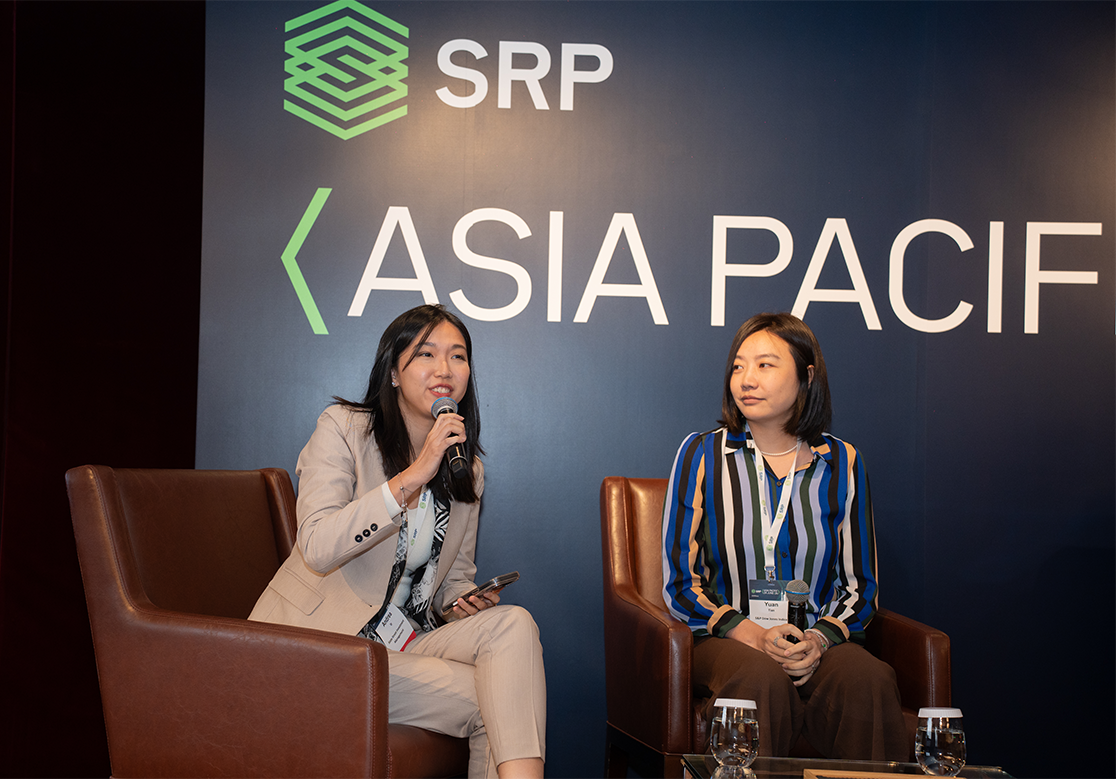
Left to right: Andrea Ip, State Street Investment Management; Yuan Tian, S&P Dow Jones Indices
One key growth area for QIS in the next five years, according to Ye, are alpha strategies, especially for tactical asset allocations.
“There is increasing demand from ultra-high-net-worth investors, who have started to ask for hedging,” he said.
Tiang concluded that QIS buffer strategies and autocall strategies historically have always been wrapped in structured notes format, with limited access for private investors, especially in Hong Kong.
“But what about incorporating into another wrapper?” she asked. “That is where QIS will provide the most value, because from our index perspective, we want to bring transparency into a complex product and that transparency can be better carried via a product wrapper like ETF to a much wider audience base.”
Do you have a confidential story, tip or comment you’d like to share? Contact Us | SRP (structuredretailproducts.com)