The bank outlines the growth drivers behind its expanding structured products franchise, from equity-linked demand to digital transformation.
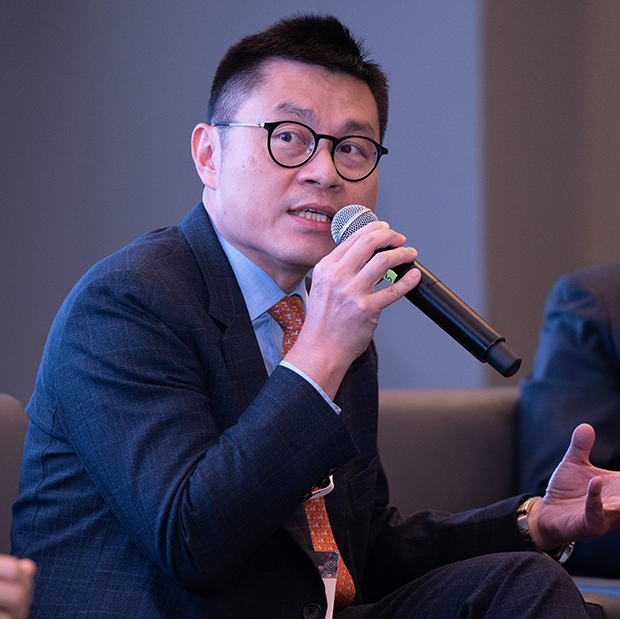
BBVA has expanded its presence in Asia’s structured products market over the past year, supported by growing demand for equity-linked solutions, investment in technology and deeper relationships with distributors across the region, according to Stephen Sun (pictured), head of equity and investment solutions sales Asia at BBVA.
We have invested heavily in digitalisation to transform the entire client journey, from pricing and execution to connectivity and post-trade servicing - Stephen Sun
BBVA was a growing force with more than 8,000 structured investment products were issued in the region during 2025, generating an estimated US$4 billion in sales volume. Taiwan alone accounted for over 2,250 product issuances, according to SRP data.
Sun said the bank’s growth has been driven by a combination of product innovation, digital capabilities and a focus on improving the client experience across the structured products lifecycle.
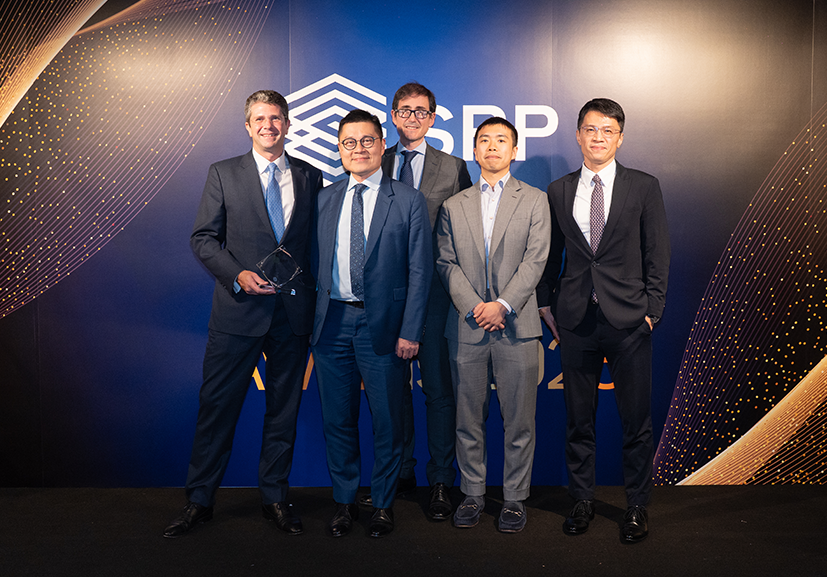
The BBVA team at the SRP Asia Pacific 2026 Awards in Hong Kong on 24 June with Stephen Sun second from left.
“Technology is not a support function for us — it is a competitive advantage,” Sun said. “We have invested heavily in digitalisation to transform the entire client journey, from pricing and execution to connectivity and post-trade servicing.”
According to the BBVA executive, the bank’s focus has been on using technology to improve speed, transparency and scalability, while ensuring that innovation remains linked to client needs.
“Whether it is expanding into new asset classes, developing digital cross-asset capabilities, or bringing complex products to market in a simple and intuitive way, every investment is driven by one objective: making it easier for clients to access better investment opportunities,” he said.
Drivers of growth
Sun identified equity-linked products as one of the strongest areas of growth over the past two years, reflecting investors’ continued appetite for tailored investment solutions that combine market participation with downside management.
“The usage of structured products is increasing, allowing investors to tailor payoffs and adjust downside risk with appropriate upside potential according to their investment needs,” he said.
However, he added that the market’s concentration around themes such as US equities, artificial intelligence and technology creates opportunities for greater diversification.
“We would like to see further use of portfolio allocation approaches, diversification and multi-asset structured product developments for the upcoming growth,” he said.
Across Asia, Sun noted that established financial hubs such as Hong Kong and Singapore continue to benefit from large wealth management networks, while markets including Taiwan, Korea and Malaysia have developed strong local financial institutions supported by domestic wealth creation.
“Regional and local financial institutions have a unique advantage due to their deep-rooted relationships with investors,” he said.
Consistent demand
Sun described market conditions in 2025 as broadly supportive for structured products, despite periods of sharp market declines and increased uncertainty.
“Volatility has trended upwards overall, given that more news is company- and sector-specific, alongside fast-changing geopolitical scenarios,” he said.
Asian investors have continued to favour shorter investment horizons compared with other regions, he added, with this behaviour likely to persist.
“Demand for products is shifting a bit more toward growth and higher returns, given that the base case (risk-free) interest rate is at a decades-high level,” Sun said.
Demand has also evolved across underlying assets and payoff structures. While technology, semiconductor and AI-related equity products have dominated flows, investors have recently shown greater interest in downside protection.
“For products without a minimum redemption level, investors have been asking for more downside protection,” he said. “For non-equity products, clients are willing to invest in yield-enhancement interest rate notes and credit-linked products with names they are familiar with.”
Looking ahead, Sun sees further potential for structured products to be used as portfolio management tools.
“We see a compelling opportunity for investors to increasingly utilise structured products as proactive hedging tools to manage broader portfolio risk,” he said.
Reshaping workflows
Digitalisation remains a key theme shaping the structured products market, particularly in Asia where distributors require high-volume processing, rapid turnaround times and greater customisation.
“Asia continues to lead the global market in digital adoption, driven by distributors' requirements for high-volume handling, ultra-fast turnarounds and customisability,” Sun said, adding that AI will increasingly influence the way wealth managers and market participants interact with structured products.
BBVA launched its Investment Solutions AI transformation programme in late 2025, with initial applications now being rolled out across client-facing tools, pricing, trading and operational processes.
“These range from client-facing developments to fast-pricing models, smart-hedging tools and pricing rules for trading,” Sun said. “We are also developing data analysis and marketing agents for sales teams, document-generation tools, and post-trade monitoring, alerting and lifecycle controls.”
The bank has also accelerated API implementation to improve connectivity with major financial institutions and reduce turnaround times for clients.
Expanding capacity
Over the past year, BBVA Asia increased its capacity to process higher structured product trade volumes through collaboration across trading, sales trading, MTN, eConnectivity and sales teams.
Sun said the bank has added several major international private banks and regional distributors, enabling more BBVA structured products to reach end investors.
“The growth in Asia business gave us the confidence to expand further into other Asian locations to capture more business in the coming years,” he said.
Looking ahead, Sun expects continued expansion of the Asian structured products market, supported by regional wealth creation and increasing demand for customised investment solutions.
“The structured products market in Asia is primed for continued expansion, driven by two key tailwinds: robust regional wealth creation and the growing appreciation for tailored, risk-managed payoffs that structured products uniquely provide,” he said.
He added that market participants should monitor sector rotation, regional allocation trends and the impact of AI on financial markets.
“AI will be the next decisive force reshaping the industry, and BBVA intends to lead that transformation,” Sun said.
BBVA was recognised as Rising Issuer at the SRP Asia Pacific Awards, acknowledging its growing presence and increasing impact in the structured products market over the past year. Click the link to view all the winners.
Do you have a confidential story, tip or comment you’d like to share? Contact Us | SRP (structuredretailproducts.com)