
A dedicated platform, broader product range and portfolio-based advisory approach have helped UOB turn high-volume structured products activity into a more repeatable part of its regional wealth business.
UOB was recognised for its strong distribution capabilities in Singapore and South & South East Asia's structured products markets, reflecting its continued activity and engagement with clients across the region. The award highlights UOB’s contribution to the development of the structured products market and its ability to deliver solutions across jurisdictions aligned with evolving investor demand.
What differentiates us is the combination of scale, disciplined product selection and consistent execution - Gidon Kessel
Gidon Jerome Kessel, group head, deposit and wealth management at UOB, said that volume reflects the scale and consistency the bank has built across its franchise. Strong equity markets and high trading velocity created a supportive backdrop, he said, but the real test was turning those conditions into activity that held up over time.
"The key was our ability to convert those conditions into sustained client activity," he said. UOB kept its product range narrow and centred on themes and payoffs that clients understood, while closer engagement across the distribution network let bankers offer suitable reinvestment ideas as existing positions were redeemed.
"What differentiates us is the combination of scale, disciplined product selection and consistent execution," Kessel (right) said, adding that the wider achievement has been folding structured products into a repeatable part of the franchise rather than treating them as a standalone activity.
Expanded footprint
Growth in 2025 came from both onshore and offshore client segments, with particularly strong flows from North Asian clients and continued momentum in Asean. Kessel tied this to UOB's acquisition of Citigroup's consumer businesses in Indonesia, Malaysia, Thailand and Vietnam, which has widened the group's customer base and distribution reach.
"This creates an opportunity to serve a larger affluent client base through a connected regional platform, while adapting solutions to local client needs and market conditions," he said.
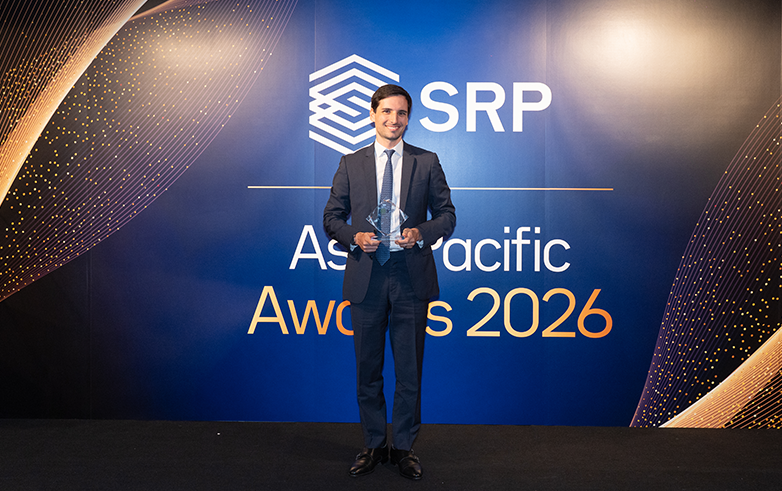
UOB was represented by Alexandre Thoniel at the SRP Asia Pacific 2026 Awards in Hong Kong on 24 June.
Kessel described 2025 as broadly supportive, disrupted mainly by the US tariff announcements in April, which weakened sentiment, triggered a sharp equity correction and temporarily reduced demand for flow structured products before markets recovered.
Relatively high rates and healthy volatility continued to support pricing through the rest of the year. In 2026, he said, the environment has remained constructive but turned more selective, with index volatility generally contained while volatility at the sector and single stock level stays elevated.
"That gap supports products that monetise single-stock volatility, including fixed-coupon notes, and has helped sustain demand despite relatively calm headline indices," he said.
New opportunities
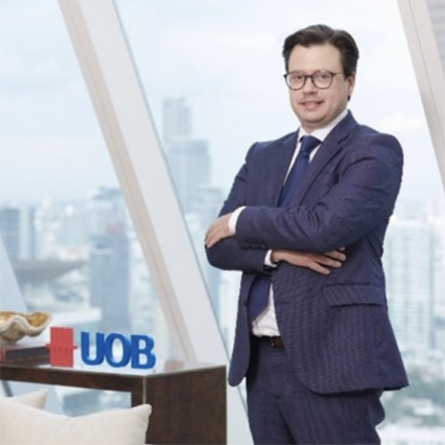
Looking to the second half of the year, Kessel (below right) struck a cautious note, pointing to elevated valuations in parts of the market and an AI-driven rally entering a phase where investors are scrutinising earnings and capital expenditure. "That creates opportunities, but also calls for more selective underlyings, appropriate barriers and disciplined risk management," Kessel said.
Digitalisation, cross-border activity and payoff innovation are the trends Kessel sees shaping the industry most directly. Digitalisation is changing how products are priced, distributed and monitored, he said, and its benefit goes beyond faster execution to a more consistent client experience.
Cross-border activity matters given UOB's Asean footprint, as clients increasingly want access across markets and currencies with a consistent service. Product innovation, he said, has been a major focus this year: UOB has turned what was historically a single fixed-coupon note offering into a full family of payoffs, adding express, bullet, rally and bearish variations, and has introduced dispersion notes to broaden its capabilities beyond yield enhancement products.
"These launches reflect our ambition to be recognized not just as a distributor of investment products, but as an active innovator that continuously expands the range of solutions available to clients," Kessel said.
Dedicated platform
The development Kessel is most proud of over the past year is the integration of a dedicated structured products platform, which he said has changed how the bank manages the business, from trade execution to full life cycle monitoring of client positions.
Near real-time updates give bankers visibility over upcoming observations, coupon payments, maturities and early redemptions, letting them reach clients before proceeds become available and narrow the reinvestment gap between one product's redemption and the next.
UOB has also redesigned its advisory approach to emphasise portfolio construction over individual product selection, weighing each solution against a client's objectives, risk tolerance and broader asset allocation.
"Better data identifies relevant opportunities, while the advisory framework ensures that each solution has a clear role in the client's portfolio," he said.
The strongest growth has come from equity autocallables, particularly fixed-coupon notes, as clients in a positive equity market kept seeking attractive income and the chance of early redemption.
Kessel also described a move away from vanilla bonds, especially in Singapore dollars, towards notes offering full principal redemption at maturity with conditional coupons, alongside growing use of range-accrual structures linked to foreign exchange, equities or interest rates.
Within equities, he said demand has stayed tied to the AI investment cycle, though preferred exposures have moved from hyperscalers and cryptocurrency names towards the "picks and shovels" behind AI infrastructure, chiefly semiconductor and memory companies.
Growing demand
Kessel remains optimistic on Singapore's structured products market into 2026 and beyond, citing strong client demand, relatively high interest rates and sufficient volatility to keep pricing attractive, though he warned that heavy flows into familiar products create risks around concentration and complacency.
UOB expects demand to broaden beyond equity autocallables towards principal-redemption-at-maturity, interest-rate-linked and hybrid structures.
"Investors are likely to seek income with more defensive outcomes and better diversification across asset classes," Kessel said, pointing at equity market concentration, elevated technology valuations and trade uncertainty as the main risks this year.
However, Singapore remains well placed as a regional wealth management hub with a strong regulatory framework he said.
Do you have a confidential story, tip or comment you’d like to share? Contact Us | SRP (structuredretailproducts.com)