The opening panel of the SRP Americas 2026 Conference assessed strong growth in US structured products, driven by rates, volatility, broader distribution and product innovation.
Sebastién Lafosse, head of US equity solutions & cross-asset distribution, Americas at Crédit Agricole CIB, who acted as moderator, kickstarted the discussion by asking panelists how structured notes fit in investors portfolios from a macro perspective.
In a bigger way than I have seen at any time in my career, we are seeing new entrants coming into the marketplace - Christopher Schell, Davis Polk & Wardwell
According to Scott Pangbourne, managing director, structured investments distribution, iCapital, there has been a convergence of strong equity performance and strong economies.
“What we're seeing is the Goldilocks effects to push this to a US$300 billion industry in the US, [which five-years ago] just shortly crossed US$100 billion,” Pangbourne said.
Christopher Schell, partner at Davis Polk & Wardwell has seen “tremendous growth” across all his client base.
“In a bigger way than I have seen at any time in my career, we are seeing new entrants coming into the marketplace […] being banks, issuers, distributors, platforms coming into the market, fielding lots of calls from high value hedge funds that are interested in the space,” Schell said.
Schell described the SEC as unusually open to financial innovation but warned that proposed registration-rule changes could create severe consequences for issuers after certain violations.
“Certain types of violations of the laws would prohibit issuers from using their registration to issue in the marketplace […] it would be catastrophic for an issuer who went through that,” he said.
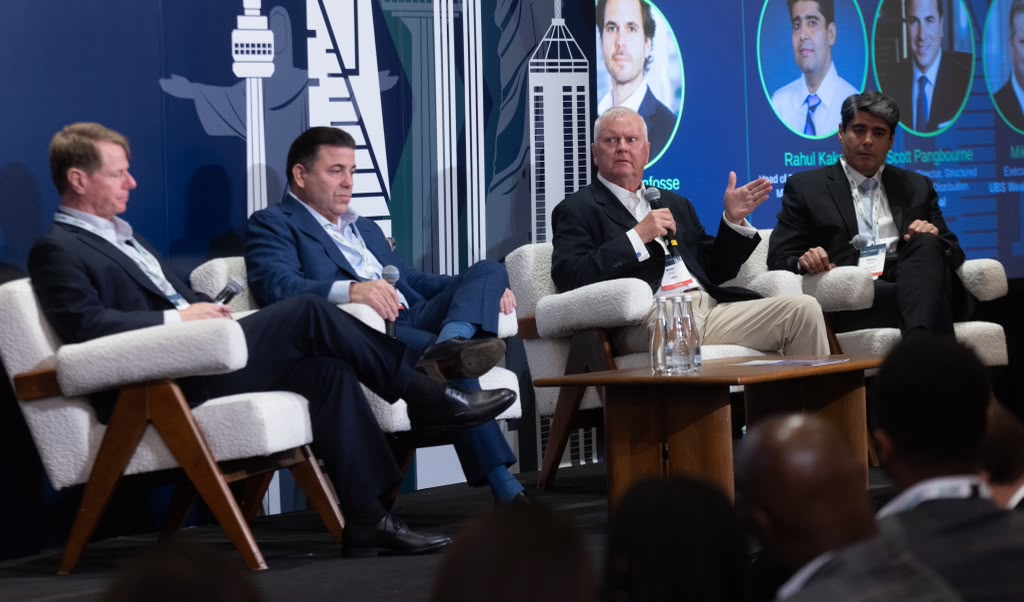
Left to right: Christopher Schell, Davis Polk & Wardwell; Scott Pangbourne, iCapital; Mike Ross, UBS Wealth Management; and Rahul Kakar, Bank of America
Not only equity-linked notes have flourished in recent years, higher rates have also led to a revival for interest-linked products, with issuance growing from US$10 billion in 2020 to US$50 billion in 2025.
“The number one factor driving the rate structures market is definitely the level of interest rates and volatility,” said Rahul Kakar, head of rates structured notes & MTNs trading-Americas, Bank of America.
“Buying a 10-year Government bond at 5% or a 10-year investment grade bond at 6% is good value for investors again,” he said.
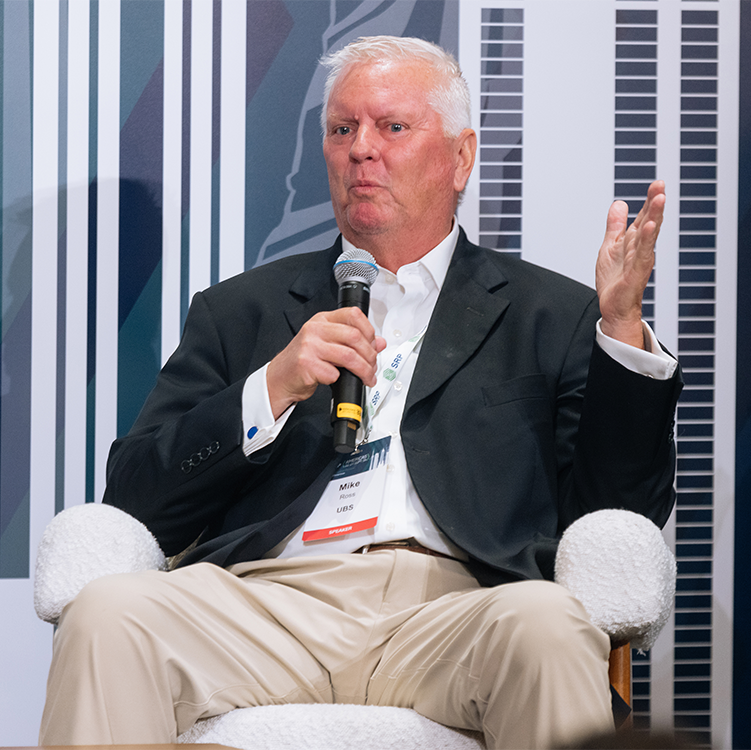
Mike Ross (pictured), executive director at UBS Wealth Management, told the audience he’s looking at the futures before the markets open every day, and for the past three months his focus has been on the 10-year Treasury.
“That 5% number is a magical number for a lot of investors. They say, ‘Look, I can get 5% risk-free, so why should I take the equity risk’,” Ross said, adding that these risk-free yields, compressed with what is offered out in contingent yield notes, will probably lead to some softening of issuance.
“If they remain relatively good spreads, people are going to buy it.”
ICapital’s Pangbourne cited reinvestment rates of approximately 167–175% following autocallable events.
“They are going deeper into their books, having a positive experience and capitalizing on that,” he said, whilst ageing with Ross that the risk-free rate has to hold true.
“The psychology of the advisor is one of: Am I getting equity-like returns for equity-like risk? The 7 to 8% for the S&P is like a psychological threshold for them,” Pangbourne said.
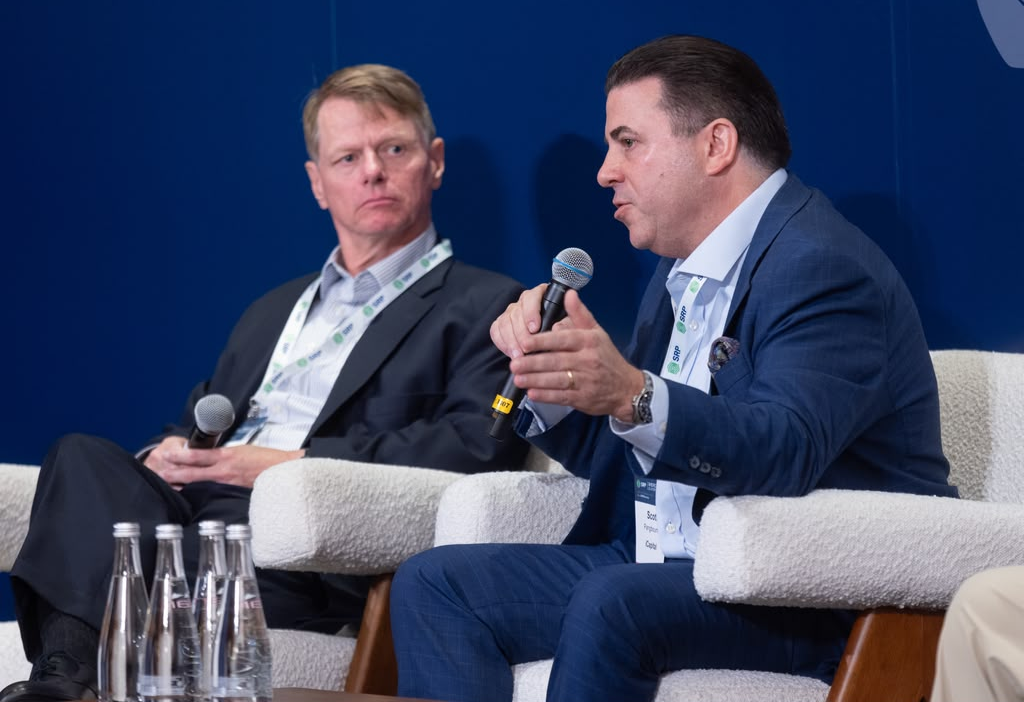
Left to right: Christopher Schell, Davis Polk & Wardwell and Scott Pangbourne, iCapital
UBS is seeing a shift from non-discretionary to discretionary advisory business, especially for yield products and book trades.
“We have advisors who will go in and do an advisory offering across 100 blocks, so obviously, discretionary makes it a lot easier for them,” said Ross.
When it comes to growth or income payoffs, Ross largely sees income products, although both are offered.
UBS advisor calendar sees yield notes open on Monday and close on Wednesday and then again on Thursday and close on Friday.
“Wash, rinse, repeat throughout the month,” said Ross.
Registered investment advisor (RIA) and wealth-manager demand is increasing, with interest in scalable, technology-enabled products while separately managed accounts (SMAs), ETFs and unit investment trusts (UITs) help simplify allocation across portfolios.
“RIA advisory is the single biggest growth area that is taking place right now,” said Pangbourne, who emphasized the increased use of passive investments by wealth managers, as well as their demands for technology in terms of compliance tools and reporting.
“We also see the reconvergence of our markets getting so big that these firms are almost like broker firms in themselves,” he said.
There is a growing audience in the rates space as evidenced by issuance volumes even though a large majority of the issuance is still to non-institutional accounts, according to Kakar.
“Institution accounts tend to prefer the large benchmark deals,” he said.
Do you have a confidential story, tip or comment you’d like to share? Contact Us | SRP (structuredretailproducts.com)