
Crypto’s volatility, liquidity, funding costs and custody infrastructure are evolving, opening up new possibilities for structured products while leaving investors with familiar risks to consider.
Crypto remains a high-risk asset class, but the market infrastructure around it is developing rapidly, challenging some of the assumptions that have limited its use in structured products.
Crypto is very highly correlated when you look at the major assets - Jeremy Dominh
That was the central theme of a fireside chat at SRP Americas 2026, which examined a number of common assumptions about crypto structured products, from volatility and liquidity to stablecoins, barriers, custody and tokenisation.
Jeremy Dominh (pictured), head of crypto structured solutions and QIS senior representative at STS Digital, argued that many of the principles underpinning traditional structured products also apply to crypto, although the underlying market introduces different sources of volatility, correlation and funding.
“Volatility is not necessarily a bad thing,” he said. “It is something that you can manage.”

Left to right: Pablo Conde, SRP and Jeremy Dominh, STS Digital
Dominh pointed to options strategies as one way of managing crypto’s elevated volatility. When implied volatility is high, investors can potentially sell options to generate yield, while lower volatility can create opportunities to buy options for upside participation or downside protection.
At-the-money volatility of around 30–35% for Bitcoin and around 50% for Ethereum, while noting that Bitcoin volatility can now be comparable with some highly volatile technology stocks, according to Dominh.
Volatility-targeting strategies can also help make crypto exposure more suitable for investors with defined risk parameters, he said.
Different economics
While structured products can use familiar building blocks such as options, forwards, volatility and correlation, crypto markets can produce different economics.
One example is volatility skew. Dominh said strong demand for upside exposure can make call options relatively expensive, influencing the economics of products designed to enhance returns or generate income.
Correlation is another consideration. Bitcoin, Ethereum and Solana can exhibit very high correlations, potentially limiting the diversification benefits of worst-of baskets.
“Crypto is very highly correlated when you look at the major assets,” said Dominh.
As a result, single-asset structures, particularly on Bitcoin and Ethereum, remain an important part of the market.
Funding is another area where crypto differs from traditional underlyings. Forward pricing can reflect Bitcoin basis and decentralised finance yields in addition to conventional interest rates, while proof-of-stake assets such as Ethereum and Solana can generate staking income.
Bitcoin itself does not generate a native yield, although the market is developing lending and other structures that seek to generate returns against Bitcoin collateral.
Easing constraints
The assumption that institutional adoption will automatically solve crypto liquidity constraints also warrants qualification.
Dominh said the institutional derivatives market has developed substantially, pointing to around US$30bn of open interest in Bitcoin options and billions of dollars in daily options trading.
That does not remove liquidity risk, but it changes the economics of accessing the asset class for institutional investors and structured-product providers.
The panel also considered stablecoins and whether they can be treated as the equivalent of fiat within the crypto ecosystem.
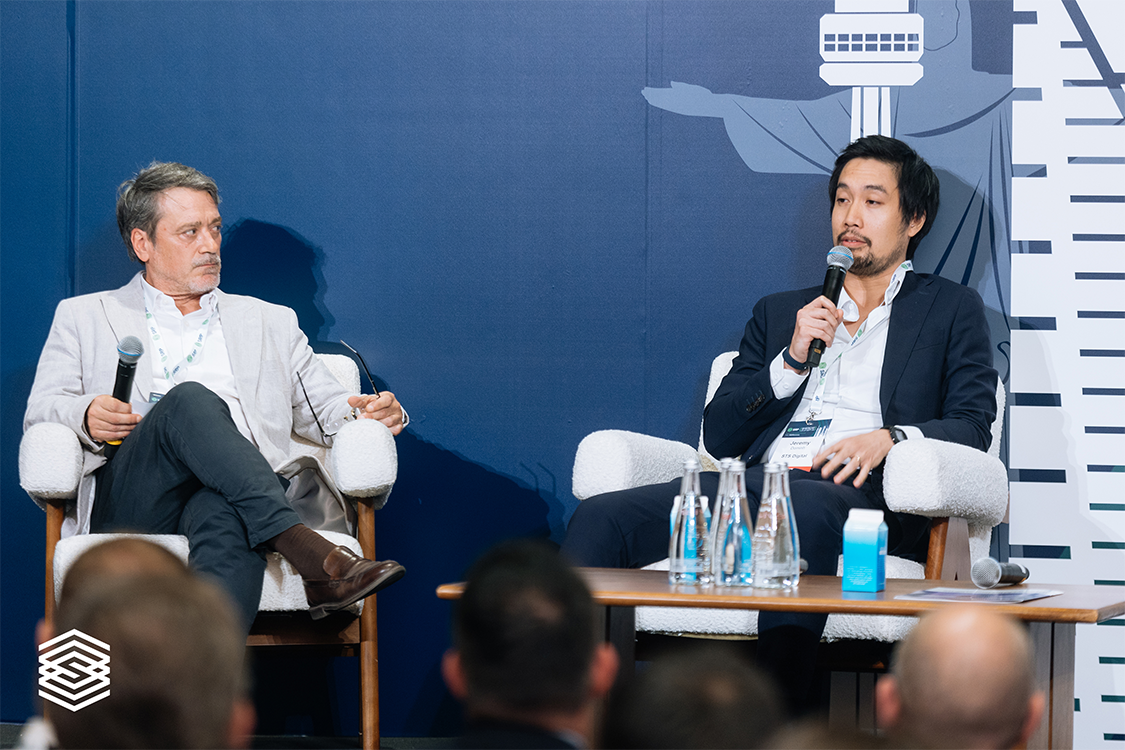
Left to right: Pablo Conde, SRP and Jeremy Dominh, STS Digital
Dominh said stablecoins perform a similar transactional function on blockchain networks but carry additional risks. Investors need to consider the issuer, reserve arrangements, transparency and the quality and liquidity of assets backing the token.
Yield-bearing stablecoins can introduce further risks, including cybersecurity and liquidity exposure where reserves are deployed into protocols.
Use of barriers
The possibility of crypto falling to zero remains one of the fundamental concerns for investors seeking to access this asset class, but structured products can offer different possibilities.
Dominh argued that barriers can be designed around the probability of a particular market event occurring rather than simply the headline volatility of the underlying.
Under the assumptions discussed, a 50% American knock-in barrier could have an implied probability of being hit of around 10%, while a 40% barrier could have an implied probability of around two percent, he cited as an example.
The figures were presented as illustrative rather than forecasts or guarantees, but the broader point was that elevated volatility does not automatically make barrier structures unworkable.
Capital and custody evolve
Capital charges and custody requirements have also historically complicated institutional access to crypto.
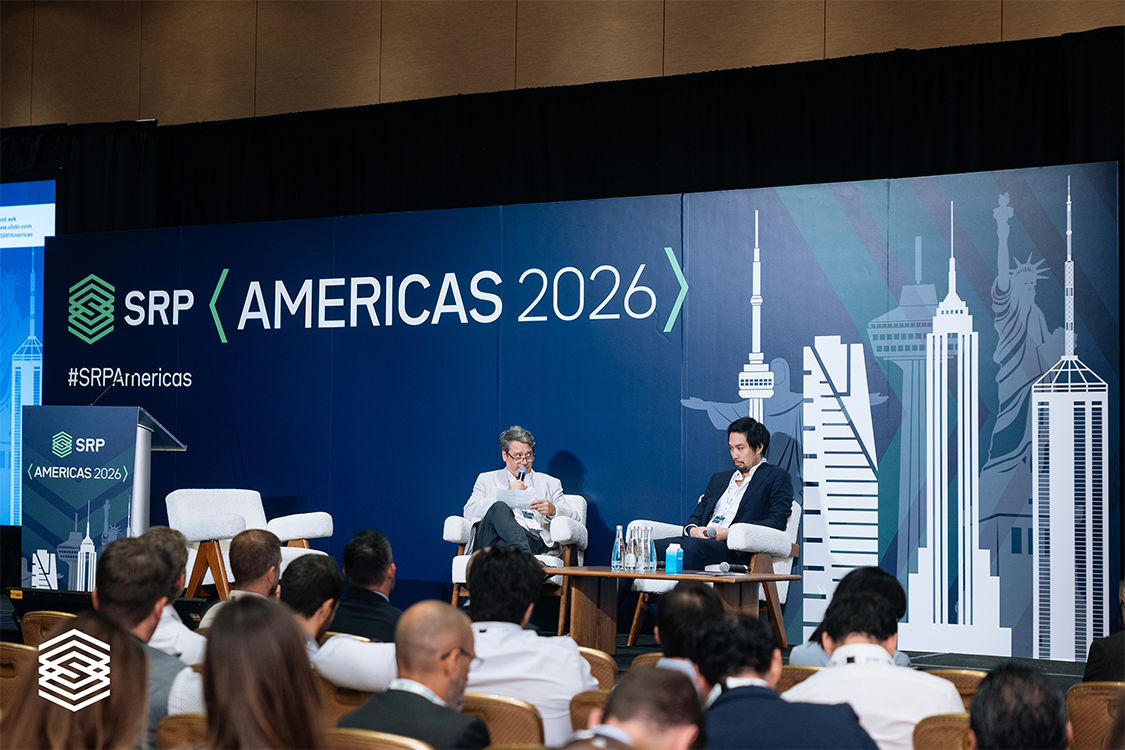
Left to right: Pablo Conde, SRP and Jeremy Dominh, STS Digital
Dominh said banks can gain exposure through derivatives or segregated custody arrangements without necessarily holding the underlying assets directly on their balance sheets.
“The custody ecosystem has also broadened, ranging from bank custody and institutional providers to self-custody,” he said.
“At the same time, increased market liquidity is putting pressure on entry and exit costs, making large spreads harder to justify for institutional investors.”
The result is a market that is becoming more familiar to traditional financial institutions, even if its infrastructure remains different from conventional asset classes.
Broader utility
Tokenisation of real-world assets is often presented as the main route to crypto’s future utility, but Dominh pointed to a broader range of potential applications.
“For structured products, the relevant question is increasingly how crypto infrastructure can be combined with established investment wrappers rather than whether traditional finance and digital assets remain separate,” he said.
STS Digital works with directly onboarded clients as well as institutions and issuance providers, including structures issued through bankruptcy-remote SPVs. Tokenised formats can also provide an alternative for investors seeking to hold exposures in wallets.
The discussion ultimately returned to distribution. Greater bank involvement, stronger market infrastructure, advisor familiarity and increased investor trust could all contribute to broader adoption.
The challenge for crypto structured products, according to Dominh, is “shifting from whether the underlying can be structured to whether the resulting product offers a sufficiently compelling combination of payoff, funding, liquidity, custody and distribution for investors to use it”.
Do you have a confidential story, tip or comment you’d like to share? Contact Us | SRP (structuredretailproducts.com)