
The evolution of insurance-native structured payoffs is bringing annuities and structured notes into closer competition for retirement savings.
The diversified insurance structured solutions like fixed indexed annuity (FIA) and registered index-linked annuity (Rila) are bringing insurers, banks and index providers together to build trustworthy and implementable retirement products for investors to mitigate risks and generate values.
It is important for the carriers to be aware of the products, strategies and cooperation with wholesalers and advising partners - Stefan Buchanan, Nationwide
That was the central theme of a panel at SRP Americas 2026, which examined how different parties can work alongside to provide insurance structured solutions that deliver durable guarantees and clear value to consumers that exceed structured notes.
Moderated by Tom Haines, executive vice president of capital markets & index solutions at Annexus, the Insurance structured solutions: FIA, Rila and indexed guarantees panel was joined by Stefan Buchanan, product strategy and business development leader at Nationwide, Molly Decker (pictured), managing director at Goldman Sachs, Kelsey Stokes, head of financial institutions sales, Americas at S&P Dow Jones Indices, Peter Webermeier, sr. consultant, product development at Lincoln Financial Group and Stephanie Bartruff, EVP, institutional sales and distribution at Annexus.

Left to right: Peter Webermeier, Lincoln Financial Group; Stefan Buchanan, Nationwide; Stephanie Bartruff, Annexus; Kelsey Stokes, S&P DJI; and Molly Decker, Goldman Sachs
Beyond structured notes
Buchanan said that the core difference between insurance products, including FIA and Rila, and structured notes is that the former provides ways to protect investors against potential risks while the latter lacks insurance guarantees.
“It’s really that core contract guarantees that the insurance product brings to the table that really is the true differentiation,” he said. Examples involve principal protection on FIA and participation in downside on buffered Rila.
Webermeier shared that the living benefit guarantees lifetime income even if the account value declines, providing greater retirement security. Enhanced death benefits facilitate legacy planning, while elder care benefits offer additional protection against potentially significant care-related expenses.
Behind the index
In terms of indexing within the insurance space, Stokes highlighted the diligence work that takes place in S&P, including back test review and expectation management.
“When we think about new innovative indices, whether that's you know volatility control, stable benchmarks, or alternatives to volatility control that still are putting that brand at the centre of it, we put quite a lot of diligence behind...reviewing the back test,” she said.

Left to right: Stefan Buchanan, Nationwide; Stephanie Bartruff, Annexus; Kelsey Stokes, S&P DJI; and Molly Decker, Goldman Sachs
Decker mentioned two key factors when it comes to the implementation level of index, one is the analysis around market impact and liquidity, the other is about parameter choices, including sensitivity to lookback periods. When evaluating an index, the feasibility and hedging capacity are among the concerns.
To develop a product with an insurance company, transparent and rules-based pricing parameters will be established to make sure that the offering commits long-term stability for the insurance carriers, she said.
Buchanan also found stability as one of the key aspects when bringing products to the market. “It is important for the carriers to be aware of the products, strategies and cooperation with wholesalers and advising partners,” he said.
Referencing the collapse of F-squared and instances of erroneous back-testing, the panel emphasised that robust governance and accurate index calculations are critical to maintaining investor confidence and product integrity.

Left to right: Peter Webermeier, Lincoln Financial Group and Stefan Buchanan, Nationwide
Speaking of insurer resilience, Webermeier pointed out “service, durable product commitment and stable renewal crediting as markers of strong insurers”.
Panelists also raised concerns about newer, lower-rated or unrated insurers. Decker shared the practice in Goldman Sachs that they will review sales practices, counterparty credit, product representation and consumer value to ensure the quality.
Active alternatives
With active funds coming to the market, active strategies were presented as a way to differentiate annuities and shift conversations from headline rates towards the underlying investment story, Webermeier said.
Stokes believes there is room for active strategies or active management to also add value, though respective benchmarks outperform active funds for the majority of time.
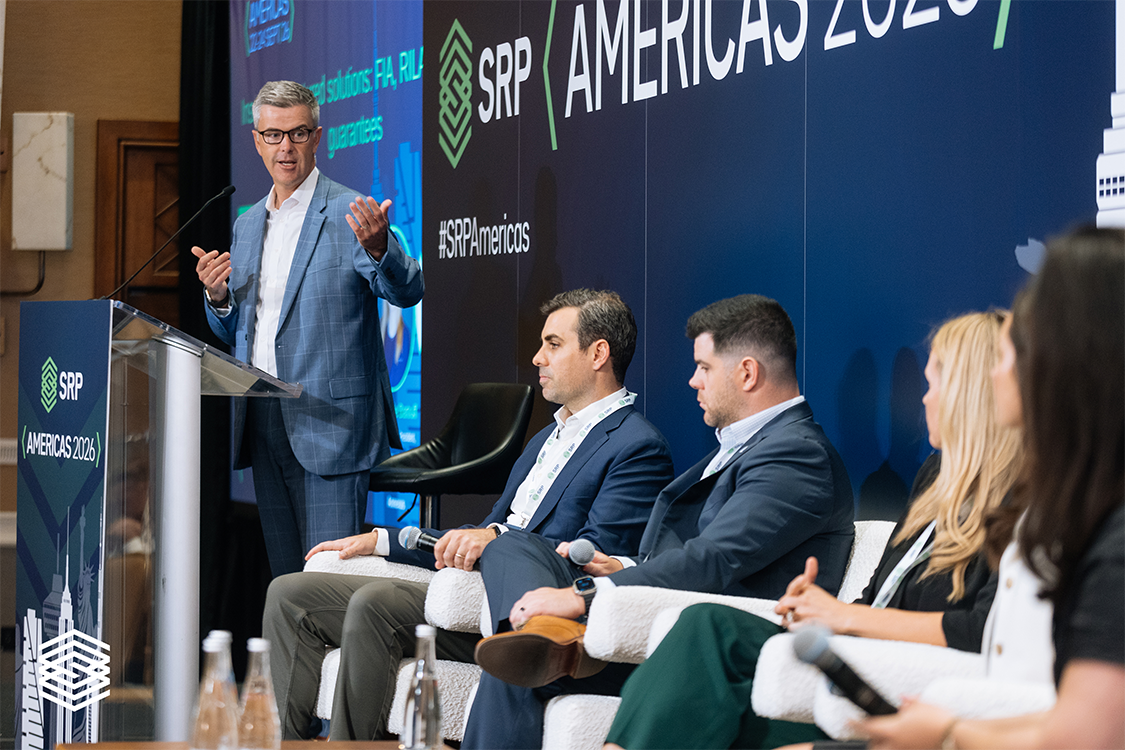
Left to right: Tom Haines (moderator), Annexus; Peter Webermeier, Lincoln Financial Group; Stefan Buchanan, Nationwide; Stephanie Bartruff, Annexus; Kelsey Stokes, S&P DJI; and Molly Decker, Goldman Sachs
Do you have a confidential story, tip or comment you’d like to share? Contact Us | SRP (structuredretailproducts.com)