Higher rates and volatility have revived demand for principal-protected notes, helping Bank of America lead Americas interest rate structured products sales in 2025.
Bank of America had a standout 2025 in the Americas interest rate structured products market, recording the highest sales volume of any issuer in the region - it sold US$16.70bn of rate-linked products across 450 issues, ahead of Goldman Sachs (US$15.23bn) and J.P. Morgan (US$14.28bn).
Public data shows interest-rate structured-note volumes have grown four to five times over the last six or seven years - Rahul Kakar
The recovery in interest rate structured products follows a prolonged period of subdued issuance as rates and volatility declined during the 2010s.
“In 2006–2008, interest rates were around today’s levels, and the interest-rate structured-notes market was robust across customer bases and geographies,” said Rahul Kakar, head of rates structured notes & MTNs trading-Americas, Bank of America.
“From 2010 to 2020, rates and rate volatility fell, and issuance stagnated or shrank in some sectors. Meanwhile, equity structured notes grew.”
Top 10 interest rate structured product issuers, Americas (by sales volume)
| Rank | Issuer | Sales volume (US$m) | Products | Avg size (US$m) |
| 1 | Bank of America | 16,697.45 | 450 | 37.1 |
| 2 | Goldman Sachs | 15,227.07 | 1,070 | 14.2 |
| 3 | J.P. Morgan | 14,284.09 | 1,804 | 7.9 |
| 4 | Citi | 13,849.77 | 845 | 16.4 |
| 5 | Wells Fargo | 5,175.39 | 436 | 11.9 |
| 6 | Barclays | 2,925.75 | 299 | 9.8 |
| 7 | Deutsche Bank | 2,862.96 | 566 | 5.1 |
| 8 | BMO Financial | 2,731.46 | 519 | 5.3 |
| 9 | RBC | 2,658.24 | 416 | 6.4 |
| 10 | Jefferies Group | 2,399.13 | 169 | 14.2 |
Source: SRP – Derivia Intelligence
The market changed when the Federal Reserve began raising rates in 2022. “Public data shows interest-rate structured-note volumes have grown four to five times over the last six or seven years,” Kakar said. “The primary drivers are higher interest rates and increased volatility, which make shorter-dated notes more attractive. Principal-protected rate products offering 6%–7% coupons have reignited interest among a broad range of customers globally.”
There’s a close relationship between the value we offer relative to our benchmarks and the amount of investor interest - Ray Doherty
Ray Doherty, director at Bank of America pointed to changes in advisor behaviour as another factor supporting demand.
“A new generation of advisors has entered the market. Some have been putting cash into broad-based ETFs rather than considering individual CUSIP investments,” he said. “These platforms, along with greater transparency, have helped re-educate advisors about single-CUSIP products, including their fees, liquidity, mark-to-market characteristics and lifecycle.”
Balancing yield and protection
Higher rates have strengthened the value proposition of interest rate products relative to equity-linked notes, although Bank of America sees the two markets as complementary.
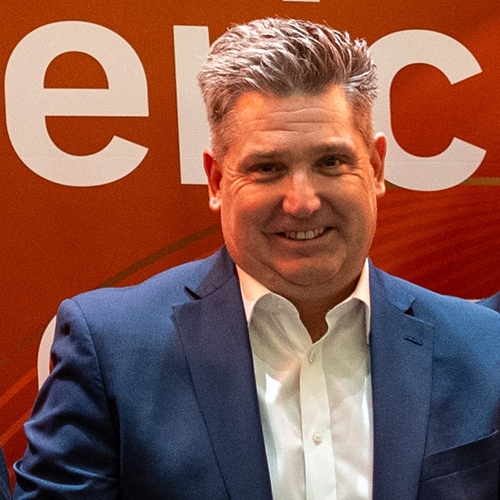
“There’s a close relationship between the value we offer relative to our benchmarks and the amount of investor interest,” Doherty (right) said. “For example, if a five-year Bank of America benchmark is trading at 5%, volatility and interest rates can create room to offer a more attractive coupon. Offering roughly 30–50 basis points above the benchmark, plus a reoffer, can make a trade attractive. Investors respond when the product offers value; below-benchmark pricing would not work.”
The difference in potential returns between rate and equity-linked notes has narrowed as interest rates have risen, prompting investors to weigh the trade-off between yield and capital risk.
“Equity structured notes have historically focused on yield enhancement, often with higher coupons, barriers and some capital at risk,” Kakar said. “When rates were around 2%, the difference between a rate product and an equity product offering 7%–8% was substantial. Now, a five-year high-quality bank-issued callable may offer around 5.5%, while an equity note might offer 8%–9%.”
“That can lead investors to weigh the risk and reward: take a lower yield with principal protection or reach for more yield in equities,” he added. “Higher rates and volatility make those rate-product yields possible.”
Doherty said the bank was reaching investors who might otherwise be reluctant to buy equity-linked notes. “We see them as complementary. There are investors and advisors who have bought equity-linked notes for years, and others who have not because they have not been trained on them or for other reasons. We can introduce those advisors to rate products through the same platforms.”
“We’re adding users who may be reluctant to invest in equity-linked notes, rather than taking customers away from that market,” he added. “Some advisors use our products because they want to reduce risk or are more comfortable with them.”
Distribution and technology
Bank of America attributes its position in the US interest rate market to its distribution reach and secondary-market capabilities.
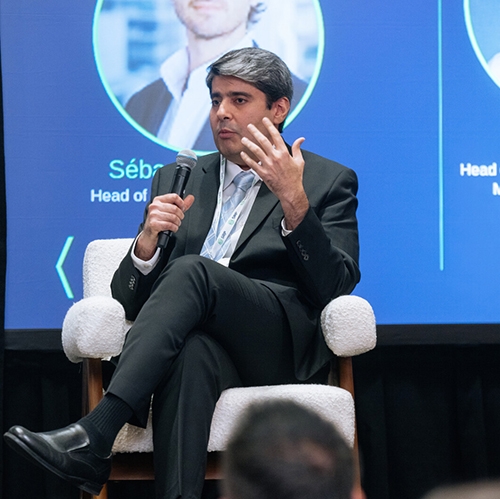
“A key advantage is the combination of broad distribution and strong trading capabilities, especially in the secondary market,” Kakar (right) said. “Customers need the ability to remark on bonds and access secondary-market liquidity, both in our name and in other names. Our wide customer base supports continued flow and helps keep customers satisfied.”
Its distribution network also allows the bank to execute larger new-issue transactions. “Our distribution also allows us to do larger new-issue deals, sometimes US$50 million or US$100 million or more, which fixed-income investors value,” Kakar said.
Non-institutional buyers account for the majority of US interest rate product consumption, he added, with institutional investors representing a relatively small portion of the market.
The bank is also investing in technology to improve execution and client access. Internally, it is automating documentation through WSD to speed up turnaround and compliance sign-off, while its global structured products platform improves visibility of product activity, innovation and approvals across regions.
Externally, Bank of America has introduced a Bloomberg-parser capability that uses an AI model to interpret free-form client requests and return pricing. Clients can request pricing for a five-year note with semiannual calls, for example, or compare multiple variations. The system currently handles around 20–30 requests a day, with the bank targeting 100 automated fixed-income prices daily.
Range notes, outlook
Fixed-rate callables remain a large part of the market, but range notes have become more popular, according to Kakar. These structures can offer additional yield enhancement based on interest rates staying within a specified range while retaining principal protection. He sees scope for further payoff innovation as the market grows and investors become more familiar with the products.

The Bank of America team at the SRP Americas 2026 Awards in Scottsdale, Arizona on 23 August. Left: Rahul Kakar
Doherty sees considerable room for expansion in the US private-bank market. “I’d estimate market penetration at around 10%, compared with the high 40s for equities,” he said. “Once a private bank becomes active, it can become very active. Growth depends in part on making advisors familiar with the products and the single-CUSIP concept.”
Across all issuers, the SEC-registered market has grown from about US$10bn four or five years ago to around US$40bn–US$45bn today. “Industry-wide, US$100bn over the next three to four years is a reasonable and achievable goal,” Doherty said.
Kakar said investors were increasingly recognising the potential to earn coupons of 6%–7% from principal-protected products issued by highly rated banks. “That can feel more comfortable to investors who are uncertain about equity valuations,” he said.
| Bank of America’s performance was recognised at the SRP Americas Awards, where it won Best House, Interest Rates. Click the link to view all the winners. |