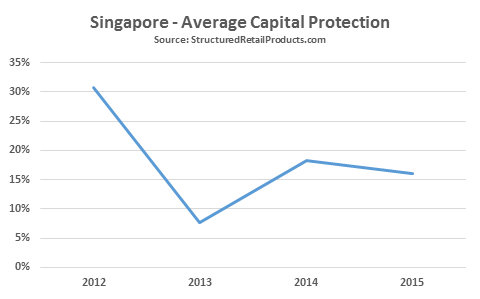
The number and volume of structured products marketed in Singapore in 2015 decreased to S$63.6bn ($44.9bn) from S$68.1bn ($48.1bn) in 2014. However, there was an increase in the average capital protection offered from 18.3% in 2014 to 16.2% in 2015, way above the 7% average recorded in 2013, but not quite near the 30% average registered in 2012. The increase in capital protected structures suggest a trend towards safeguards against hidden risks for products exposed to the global markets.
"The 'wait and see' psychology resulting from a very interesting 2015 has moved risk appetites to accept lower return or rather sacrifice return for more understandable certainties, said Kainoa Blaisdell (pictured), lead structured product strategist at NEBA Financial Solutions.
From a payoff type point of view, the capped call option gained traction in 2015 on the back of increased concerns around volatility and the negative forecast around emerging markets. On average callable features (eight out of 100 products marketed in 2015) were below the 2014 mark (nine out of 100 products) but remained a popular choice for investors alongside capped call structures which increased by 600% compared to last year.
"In an environment where the returns from equity markets and bonds may be low or subject to short-term volatility, autocalls and other structured products that offer a high positive carry appeal to a wide audience," said Blaisdell. "The effect of this are requests for consulting on and sourcing structured products with call or capped call [features]."
According to Blaisdell, investors in structured products are now willing to sacrifice return for three things: increased chance of early redemption and observation dates, increased protection and shorter investment terms. "The rational is to maintain safety, but to be able to capitalise on any positive movement in the markets," said Blaisdell. "This is again an extension of this 'wait and see' psychology prevalent in the market. The ability to 'wait' but have a chance to participate once again when one feels comfortable."
Dual currency structures remained the most popular mainly around foreign exchange-linked structured deposits. Although the market is still dominated by flow products, tranche-based products became more visible in the retail market making up around 20% of the products issued.
"Forex products are also going to remain popular," said Blaisdell pointing at the divergence between ECB and Fed monetary policies and the pressure placed on the performance of the euro in 2016 as the reasons behind this trend. According to Blaisdell, however, the most obvious plays will be straight short positions on the euro and long on the US dollar with volatility plays also retaining their appeal as research suggests that "higher interest rates coincide with increased volatility".
The most active provider during the fourth quarter of 2015 was Standard Chartered which also topped the country rankings in terms of issuance and sales volumes. The bank was number one for tranche products increasing its market share by 31% in 2015, although it is not yet clear what will happen to its issuance programme now that the bank has exited its equity derivatives activities in Asia.
Related stories:
SGX launches thematic indices, aims at leveraging calculating capabilities with SP providers
Nomura bolsters wealth management Asia ex-Japan
Investors to shy away from yuan-related products
Structured Products arrivals and departures 2015 - Apac: Part 1
Structured Products arrivals and departures 2015 - Apac: Part 2