Technology has had the most profound effect on structured products in Asia, with the efficiencies on offer well-suited to a market that is short-term, relatively standardised and almost all based on primary issuance.
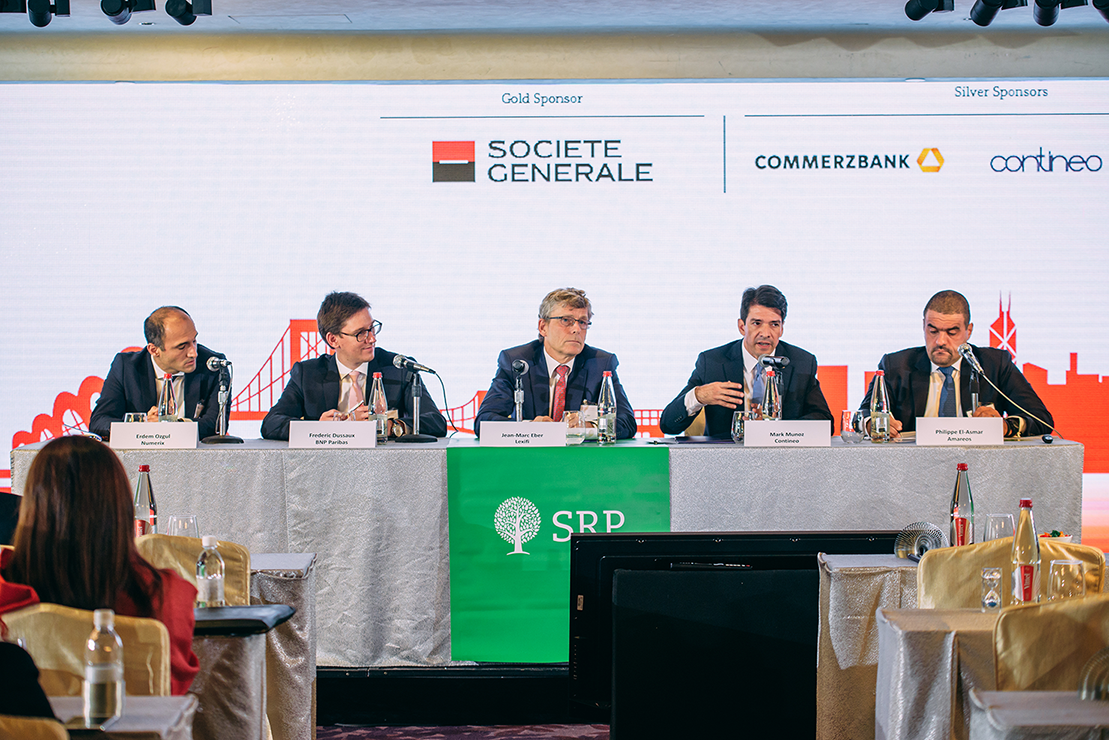
"Ten years ago, the workflow was extremely simple: the client called the salesman, who took a note on a piece of paper of what the client wanted, and the salesman would call the trading desk, taking this piece of paper and reciting the request for quote from the client," said Frederic Dussaux (pictured), head of EQD E-business and digital offering at BNP Paribas. "The salesman would then go for lunch, while waiting for the pricing team to come back with a price. The pricing team would come back, the sales would call the client and the response might be that the price was not aggressive enough, or that maybe the maturity could be extended."
"Ten years after, thanks to the global financial crisis, pricing tools have emerged and have been given to sales and then, through single-dealer platforms, to private banks and distribution networks, has streamlined the process on the investment bank and sellside, but also on the buyside," said Dussaux.
The result of technology has been to make life easier for those distributing products. "Things are becoming easier on the buyside, but the real problem lies in the communication with them and the sellside," said Jean-Marc Eber, founder and chief executive officer at Lexifi. "We still see something that is very manual, with communication still done through term sheets and writing things. To reduce costs and for sellside not just to push products, but to help the buyside, and hedge the risk of its clients, we need a much easier communication channel between the sell- and buyside. So we have created a formal definition of contracts, which is beginning to be used by the buyside, such as BNP Paribas.
"The buyside must be equipped to advise its clients and autonomous, with a pricing capacity which is not just discovering the price of the sellside, risk analysis and scenario analysis, and the ability to respond to regulatory needs," said Eber.
The technology answer assisted in other benefits, such as a more standardised market, according to Mark Muñoz, managing director at Contineo. "We have created standards to lower the costs for the buy- and sellside," said Muñoz. "That helps the sellside connect to clients, but also helps the buyside transact more, going from pricing to selling to post-trade services. Wealth management product distribution has a high cost and gains will come from coming together as a consortium, with standard term sheets, which also help on the regulatory side."
Across the Asia-Pacific region, the requirements extend beyond wealth management products. "In private banking and wealth management, there is a lot of attention on investing in technology, but not just in multi-dealer platforms or price execution or price discovery, but also looking within institutions about how these services are integrated from end to end," said Erdem Ozgul, managing director, South Asia at Numerix. "You can have all the automation you want with initial price discovery, but if this information is not disseminated all the way through to back office operations and compliance, and a roundtrip is established incorporating lifecycle effects, such as corporate actions, you solve only part of the problem.
"In markets outside Hong Kong and Singapore, we are seeing increased activity that does not concentrate quite so much on private banking and wealth management. In India, for example, they are looking at the distribution of products within a commercial or retail bank between their treasury and branch network."
When it comes to the secondary market, there are two main differences between Europe and Asia, according to Dussaux. "Firstly, the relative weight of the primary versus secondary market, with structured sold in Europe having longer maturities and less early redemption features," said Dussaux. "Secondly, on the primary side, things are more standardised on the flow side in Asia. In Europe, there is more demand for secondary tools; in Asia, we had to develop more tools to cope with the huge number of requests on the primary side."
The changes required will not come quickly. "Technological investments are not done within one year - you need two, three or more years," said Eber. "Furthermore, market assumptions change. Although Asia has shorter maturity products, from a technical point of view, this does not change the game. And the same types of rules will be applied in all parts of the world."
But there are unexpected benefits. "We can now look at the market at an aggregate level - something we could not do 10 years ago - and provide a better insight of core but also global markets," said Muñoz. "We see a significant amount of flow, we give this back, which is a unique value add. We did not know that that would be there when we started to provide the solution."
The technology future includes roboadvisers. "You must first know your client, of an asset allocation - his risk adversity, for example," said Eber. "But you must also have a very precise view of the investment environment, so you know the best structured products to use, and that's the difficulty. It will not be solved in one year."
Muñoz added, "roboadvisers is a new service and not necessarily disruptive technology, but it will still take a long time to create trust. It has been around for a long time, and now we are just finding better ways to use this technology and get more assets from a client."
There are obstructions to the development of roboadvisers that serve structured products. "You can only automate or bring artificial intelligence based on all participants in the market place," said Ozgul. "You need open architecture and, at the moment, it is quite closed. If there is no liquidity, it means nothing."
Wealth transfer and international investment vital for development in China, SRP Asia
Hong Kong remains China gateway; SPVs return to the fray, SRP Asia
Unlocking cash as hedging education seeps through to private investors, SRP Asia
Active management certificates lead the way as CLNs bump into complexity, SRP Asia
Artificial intelligence is good for investment advice, but not so good for lawyers, SRP Asia