Following its success at the SRP Asia Pacific Awards 2026, UBS shares insights into the trends driving structured products innovation across the region.
Asia's structured products market is entering a new phase. Demand is broadening beyond traditional flow products into quantitative investment strategies (QIS), actively managed certificates (AMCs) and increasingly sophisticated multi-asset solutions.
Volatility has become one of the defining characteristics of markets during both 2025 and 2026 - Winni Cheuk
At the same time, digital distribution, automation and artificial intelligence are reshaping how products are designed, issued and managed, while investors continue to seek differentiated investment outcomes in an environment defined by persistent market volatility.
Against this backdrop, UBS was recognised at the SRP Asia Pacific Awards 2026, winning Best Listed SP Issuer, Asia Pacific and Best House, US Equities. The awards reflect a business that has continued to expand across listed products, flow structured products, QIS and bespoke investment solutions while investing heavily in technology, automation and scalable infrastructure.
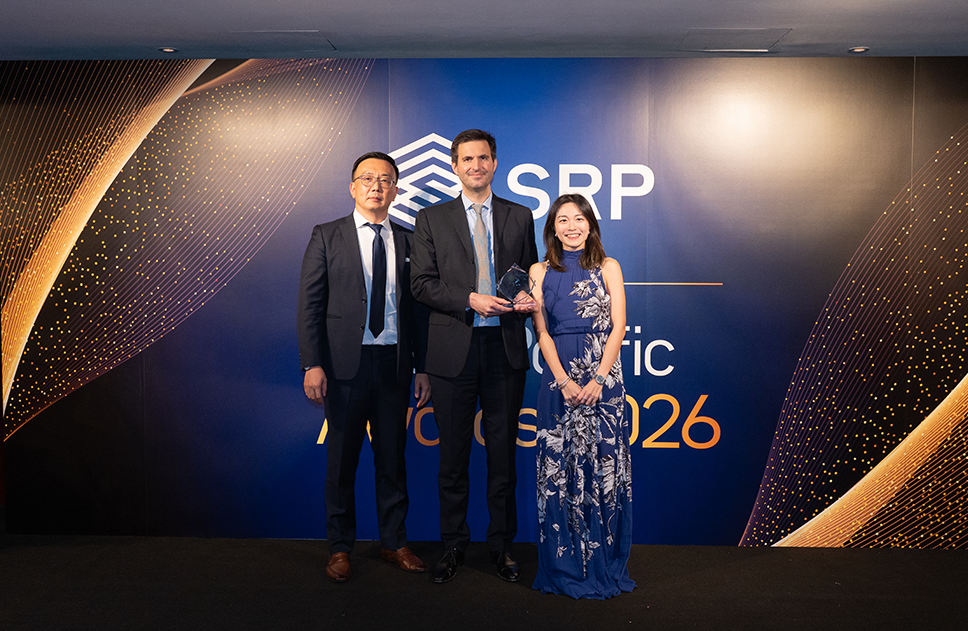
The UBS team at the SRP Asia Pacific 2026 Awards in Hong Kong on 24 June 2026
The numbers illustrate that momentum. UBS says client volumes in its flow structured products business have risen by almost 70% year-on-year in 2026, while more than US$800m in notional linked to its QIS strategies has been distributed across Hong Kong, Singapore, Taiwan, Malaysia and Thailand. Meanwhile, AMCs are moving beyond their traditional institutional investor base and gaining traction among private banking clients seeking access to specialist investment strategies.
Artificial intelligence has enormous potential across the structured products lifecycle - Jennifer Wong
For issuers across Asia, scalability is becoming just as important as innovation. As product ranges expand and investors become increasingly digital, technology platforms capable of automating issuance, lifecycle management and client engagement are emerging as a key competitive differentiator.
SRP spoke with Jennifer Wong, head of intermediaries cross asset sales, Asia ex-Japan, and Winni Cheuk, head of sales, Apac public distribution, about the trends shaping the next phase of growth.
UBS received several recognitions at the SRP Asia Pacific Awards. What do you believe has differentiated the business over the past year?
Winni Cheuk: We are very pleased to receive the Best Listed SP Issuer, Asia Pacific recognition. From our perspective, it reflects a combination of consistency, execution and long-term investment in the business.
We've been consistently active in the market, providing liquidity and competitive pricing across a broad range of warrants and callable bull/bear contracts (CBBCs), including during periods of heightened volatility. Maintaining market quality through different market cycles is something we see as fundamental to our role as an issuer.
We've also built a comprehensive listed products platform covering Hong Kong equities, major international indices and an expanding universe of underlying assets. That gives investors a wide range of tools to express different market views.
At the same time, we've continued investing in technology and automation to improve operational efficiency and enhance the overall investor experience. The results speak for themselves. In 2025, UBS ranked as the number one issuer in Hong Kong by combined net notional issuance across warrants and CBBCs, reflecting both the scale of our platform and the confidence investors place in us.
Beyond listed products, how has the broader equity derivatives business evolved over the past year?
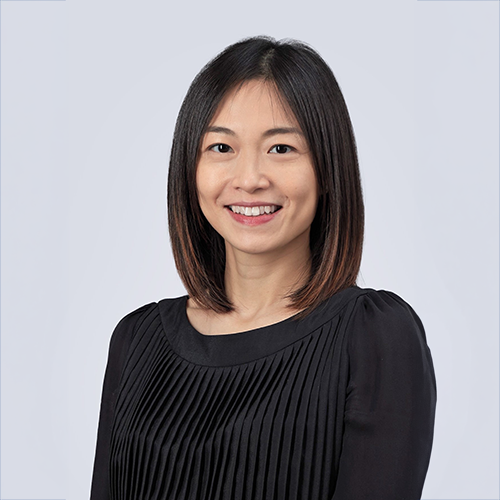
Jennifer Wong (right): One of UBS's key strengths is the breadth of our platform. Listed products are one important part of the franchise, but we also have significant capabilities across flow structured products, bespoke solutions, quantitative investment strategies (QIS) and actively managed certificates (AMCs).
Within our flow structured products business, we've seen exceptional momentum. Year-to-date in 2026, client volumes have increased by close to 70%, compared with the same period last year. It's an outstanding first half and we've continued to outperform the markets.
We're also continuing to invest heavily in infrastructure, risk systems and platform enhancements to support future growth. As the structured products market continues to grow phenomenally in this part of the world, scalability becomes increasingly important. We want to ensure we're well positioned both for UBS's own wealth management franchise and for third-party distributors.
Alongside that, we continue to invest in product innovation through our structuring capabilities, enabling us to deliver increasingly sophisticated payoff solutions to clients across Asia.
Quantitative investment strategies have become an increasingly important part of the market. How is UBS positioned in this space?
Jennifer Wong: QIS has become one of the most exciting areas of growth for us.
One example is our collaboration with Professor Robert Engle, the 2023 Nobel Prize winner in Economics. Together we've developed a family of volatility-targeted strategies that have been very well received across Asia.
To date we've distributed more than US$800 million in notional value linked to these strategies across markets including Hong Kong, Singapore, Taiwan, Malaysia and Thailand.
More broadly, we're seeing investors gradually diversify beyond traditional equity exposure into multi-asset strategies. Our QIS platform now includes a broad range of systematic investment solutions covering different investment objectives, from market-neutral to high-conviction strategies and multi-asset allocations.
The key point is that clients increasingly want differentiated investment outcomes, and our platform allows us to deliver solutions across a wide spectrum of market environments.
What trends are currently shaping demand across Asia Pacific?
Winni Cheuk: In the listed products market, we've seen continuous product innovation supported by the Hong Kong Stock Exchange. Over the years, new product structures have been introduced while the range of eligible underlying assets has steadily expanded.
Today investors have access not only to Hong Kong equities but also major international indices and an increasing number of Asian underlying assets.
From an investor’s perspective, US equities remain very popular. At the same time, we're seeing strong interest in semiconductor companies, artificial intelligence leaders and biotechnology names across Asia.
Volatility has become one of the defining themes of both 2025 and 2026. Many of these stocks experience significant daily price movements, creating uncertainty but also generating opportunities for investors using leveraged listed products.
At the same time, digitalisation is transforming how investors access information, trade products and engage with issuers. Better analytics and greater access to market data are helping investors make increasingly informed decisions.
Where do you see the biggest growth opportunities over the next few years?
Jennifer Wong: Asia remains one of the world's strongest long-term growth markets for wealth management, insurance and investment products. Within insurance, we see significant opportunities for QIS as insurers increasingly incorporate systematic investment strategies into their product offerings.
We're also seeing growing interest from high-net-worth individuals around wealth preservation, succession planning and insurance-linked investment solutions, creating additional opportunities for structured products.
AMCs represent another important growth area. Historically these were largely institutional products, but they're increasingly being adopted by private banking clients seeking access to specialist investment strategies or otherwise difficult-to-access markets.
Digitalisation is also fundamentally changing distribution. Increasingly, retail and private banks are integrating structured products into mobile platforms that allow clients to discover prices, execute trades and manage investments digitally.
As distribution becomes more efficient, the overall market continues to expand. Success will increasingly depend on whether issuers have sufficiently scalable technology platforms and strong lifecycle management capabilities to support clients throughout the investment journey.
How is the listed products market itself evolving?
Winni Cheuk: One important development is the gradual expansion of eligible underlying assets across Asia. Historically, listed products were concentrated around domestic underlyings. Today, we're seeing broader access to Korean and Japanese equities, US indices and other regional markets, subject to regulatory approval. Investor behavior has also become noticeably more tactical.
Rather than holding leveraged products for extended periods, many investors are increasingly using warrants and CBBCs to express short-term views around earnings announcements, policy developments or other market events.
This more active trading style reflects today's market environment, where volatility creates both risks and opportunities.
How is UBS using technology, automation and artificial intelligence?
Winni Cheuk: Automation has become essential within listed products. Large issuers can issue thousands of products every year, making efficient issuance and market-making processes critical. We've invested significantly in automating issuance workflows, improving operational controls and increasing scalability.
We're also actively exploring new technologies. In 2024. UBS completed Hong Kong's first-ever tokenised warrant transaction with OSL Group for professional investors. This showcased UBS’s capabilities in the digital asset space and reinforced UBS as a leading derivative products issuer in Hong Kong.
Jennifer Wong: Within structured products we're seeing many practical applications for artificial intelligence. There are numerous lifecycle processes that have traditionally required manual intervention. AI now offers opportunities to automate documentation, improve secondary market services and enhance operational efficiency.
We're also exploring how AI can help analyse client interactions and identify emerging investment trends. Understanding whether clients are increasingly seeking yield enhancement, hedging strategies or high-conviction investments allows us to respond more effectively and better support distributors.
Ultimately, AI enables us to transform large amounts of client information into actionable insights while improving client experience.
How are regulatory developments shaping the market?
Jennifer Wong: Regulation is always evolving, but we've maintained robust governance across our structured products business for many years.
Whether we're discussing AMCs or QIS, risk management remains central. We operate comprehensive governance processes and market risk committees that review strategies to ensure compliance with applicable regulatory requirements across different jurisdictions.
At the same time, we're encouraged by developments in several ASEAN markets, including Thailand and Malaysia, where regulators are gradually creating greater flexibility. As wealth continues to grow across Southeast Asia, these markets represent significant long-term opportunities for issuers with strong structuring capabilities and local client engagement.
Winni Cheuk: Within Hong Kong's listed products market, we've also seen positive regulatory developments. The Hong Kong Stock Exchange's recent revisions to Chapter 15A of the Listing Rules improve flexibility for issuers while strengthening transparency and investor protection.
Measures such as lowering minimum issue prices allows issuers to develop a broader range of products while improving market quality, liquidity and investor choice.
Overall, we see these changes supporting the long-term competitiveness of Hong Kong's listed products market.
Looking ahead, how do you see the remainder of 2026?
Winni Cheuk: I'm optimistic about the outlook for listed products. Retail investors continue to value leveraged instruments as efficient tools for expressing market views across different market conditions. Product innovation, digital engagement and ongoing regulatory enhancements should continue supporting market development.
We're also excited by the opportunity to expand the range of underlying assets available to investors as markets continue to evolve.
Jennifer Wong: My personal view is that volatility is likely to remain a defining characteristic of markets for the rest of 2026.
From a structured products perspective, volatility creates opportunities for innovation and client engagement. Our focus will continue to be on scalable product innovation, platform enhancements, infrastructure investment and wider adoption of artificial intelligence.
UBS already has a broad suite of capabilities across structured products, QIS, AMCs and listed products. Our objective is to continue differentiating ourselves by combining innovation with scale, enabling us to deliver increasingly sophisticated investment solutions to clients across Asia as the market continues to grow.
Image: Pawel-Wierzchowski/Adobe Stock
Do you have a confidential story, tip or comment you’d like to share? Contact Us | SRP (structuredretailproducts.com)